Orlando, FL
Pavers in Orlando, FL: Costs, Permits, and Vetted Installers
Most paver websites in Orlando open by telling you how many years they have been in business. This one opens with the three things homeowners actually ask first: what it costs, whether you need a permit, and how to avoid hiring the wrong crew.
We are not a paver contractor. Pavers Orlando Co is a local referral service that connects Orange, Seminole, and Osceola county homeowners with licensed, insured installers.
Because we do not run a crew or sell materials, we have no reason to talk you into a bigger job than you need. We just point you to someone who does good work.
Everything below is checked against Orange County’s own guidance and current Central Florida pricing. When you are ready, tell us about your project and we will match you with an installer who will come out and measure.
What Does a Paver Driveway Cost in Orlando?
For a standard concrete-paver driveway in the Orlando area, expect roughly 13 to 18 dollars per square foot installed, with most full projects landing between 8,000 and 22,000 dollars depending on size, material, and how much base work the job needs. That is the honest headline number. But paver pricing is genuinely spread out, and it is worth understanding why before you trust any single quote.
What the numbers actually look like
Published Central Florida pricing clusters like this:
| Material | Installed price per sq ft |
|---|---|
| Concrete pavers | $12 to $18 |
| Brick / clay pavers | $14 to $22 |
| Travertine | $14 to $28 |
| Porcelain / natural stone | $22 to $32 |
For whole projects, a 500 to 600 square foot driveway typically runs 15,000 to 34,000 dollars in Orange County for mid-grade work, while a smaller two-car driveway can start near 8,000. A 400 square foot paver patio lands around 4,800 to 12,800 dollars.
Why two quotes for the same job differ by 40 percent
Almost always, the difference is underneath. The single biggest cost variable is base preparation, and it is completely invisible in a finished driveway. A contractor pricing a shallow three-inch base and one pricing a proper six to eight inch compacted base are not quoting the same job, even though both estimates say paver driveway.
Ask every bidder to itemize excavation, base depth and material, bedding sand, pavers, edge restraint, and labor as separate lines. A single-line price is an invitation to a change order. For the full breakdown, see our Paver Cost in Orlando guide and How to Read a Paver Estimate.
Do You Need a Permit for Pavers in Orlando?
Yes, and this trips up homeowners constantly, because Orlando and Orange County are two different permitting authorities. Which one you deal with depends on which side of the city line your house sits on.
Unincorporated Orange County
Orange County’s own guidance is unambiguous: anytime you pour concrete or place pavers, a permit is required. There is no size exemption, so the same rule covers a driveway, a walkway, and a patio, regardless of square footage. Pavers need a Zoning permit, reviewed against placement, location, and materials, with a final inspection.
- Total fee is 76 dollars: a 38 dollar permit fee plus a 38 dollar development engineering review fee.
- Pull the permit after code enforcement makes contact and it costs an extra 40 dollars, so 116 total.
- Apply by email to Zoning at ocfl dot net with the subject line Residential Pavers Application.
- Pay through the Fast Track portal, user category Zoning slash BZA.
- Review completes within four business days of payment.
Inside Orlando city limits
The City of Orlando handles paver installation, removal, and driveway expansion as an Engineering Permit rather than an ordinary building permit. Applying under the wrong permit type is a common source of delay, so confirm the classification before you file.
The 40 percent open space rule
Orange County code section 24-29(a) requires residential lots to keep 40 percent of the yard as private open space, measured across front, rear, and side yards. Paved driveways and structures count against that number, but pools, tennis courts, and porches count toward it. This is the rule that kills oversized driveway extensions. It is also why a permeable paver system or a ribbon driveway sometimes makes an otherwise impossible project fit.
HOA approval is separate from any permit
Florida HOAs operate under Chapter 720 of the Florida Statutes, which lets an architectural review committee approve materials, colors, and layout before work starts. In master-planned communities like Lake Nona, Baldwin Park, and Windermere’s gated neighborhoods, the ARC submission often takes longer than the permit itself. See our full Orlando Permit Guide, the 40 percent open space explainer, and the HOA approval checklist for the details.
Why Pavers Fail in Central Florida, and What a Proper Install Looks Like
Pavers themselves rarely fail. What fails is the ground underneath them.
The soil problem
Central Florida sits on sandy soil with a high water table. Sand drains fast but shifts easily, and moving water carries the fine particles away over time, leaving voids. Add organic pockets that compress, uneven fill from the original construction, and around 51 inches of annual rainfall, and you have conditions that punish shortcuts.
Most local paver failures trace to one of four causes: soft or organic soil left in place under the base, insufficient base depth for the load, poor compaction, or drainage routed across the surface.
What a driveway base should actually be
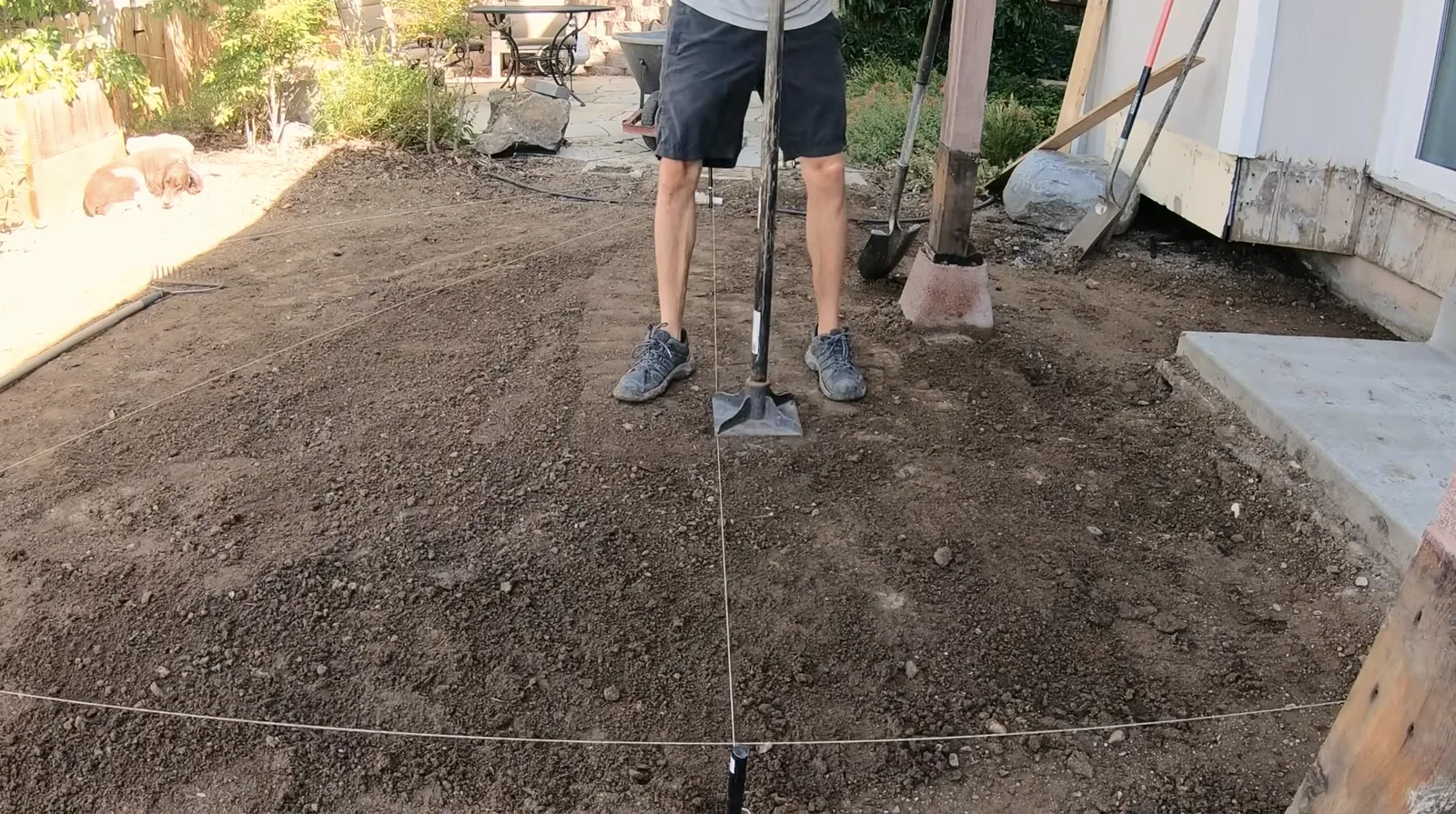
A paver driveway carrying vehicle weight needs a six to eight inch compacted limestone base laid over geotextile fabric. The geotextile separates the base from the subgrade so the two do not mix and lose load-bearing strength over the years. Patios and walkways that only carry foot traffic can go shallower. Driveways cannot.
Edge restraint and drainage
Use concrete edging, not plastic spike edging. Florida’s sandy soil does not hold spikes reliably, and once the edge lets go, the field starts to spread. Downspouts emptying directly onto pavers scour the joint sand out over time, so a competent installer reroutes them. Roadside swales cannot simply be filled to raise a driveway; the correct fix is a culvert with the driveway built over it.
WHAT WE DO
Paver Services in Orlando
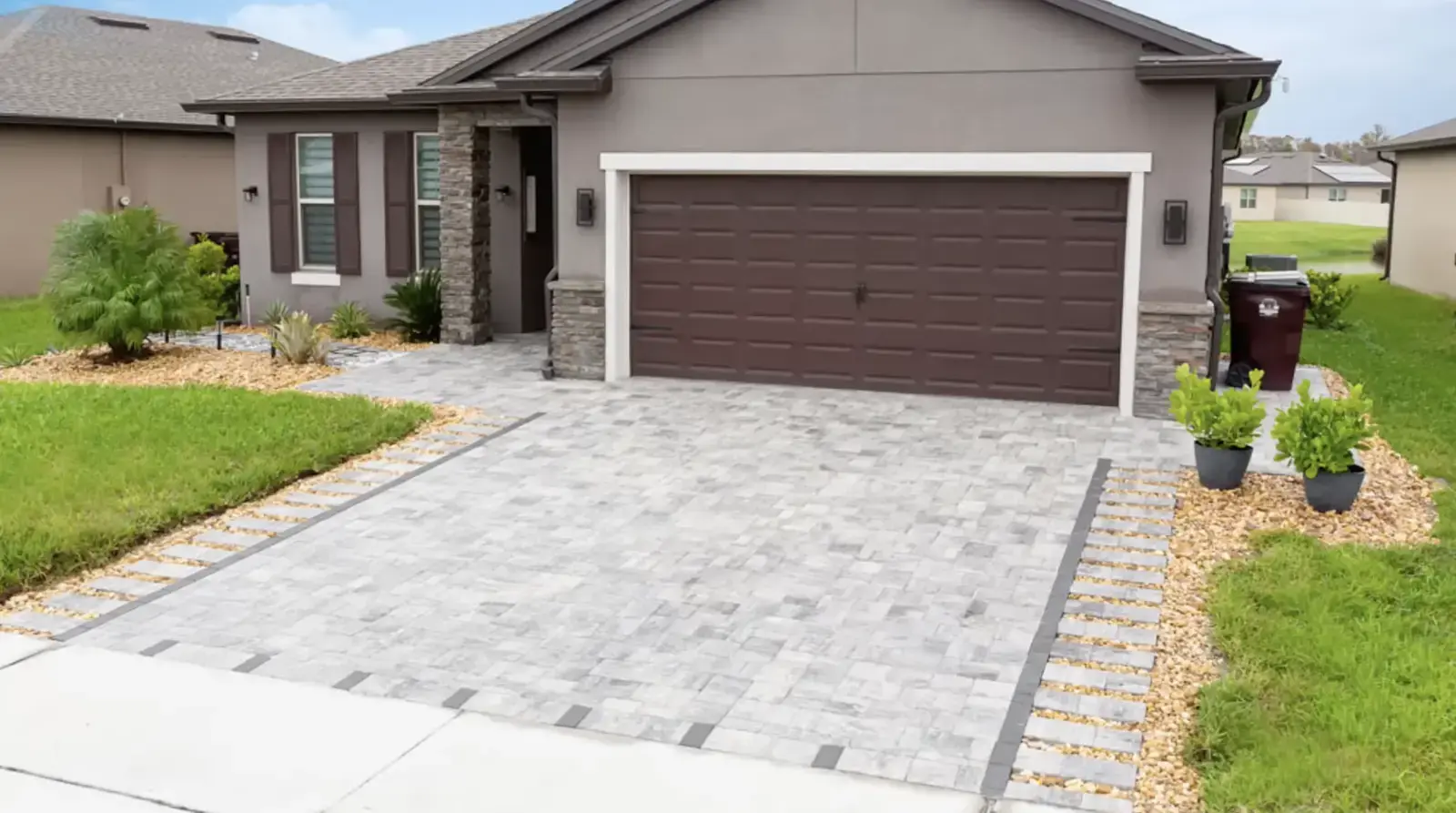
Paver Driveway Installation
Full replacement of a cracked concrete driveway, or new installation, built on a proper six to eight inch compacted base. The highest-value application and the one most sensitive to base quality. Learn more
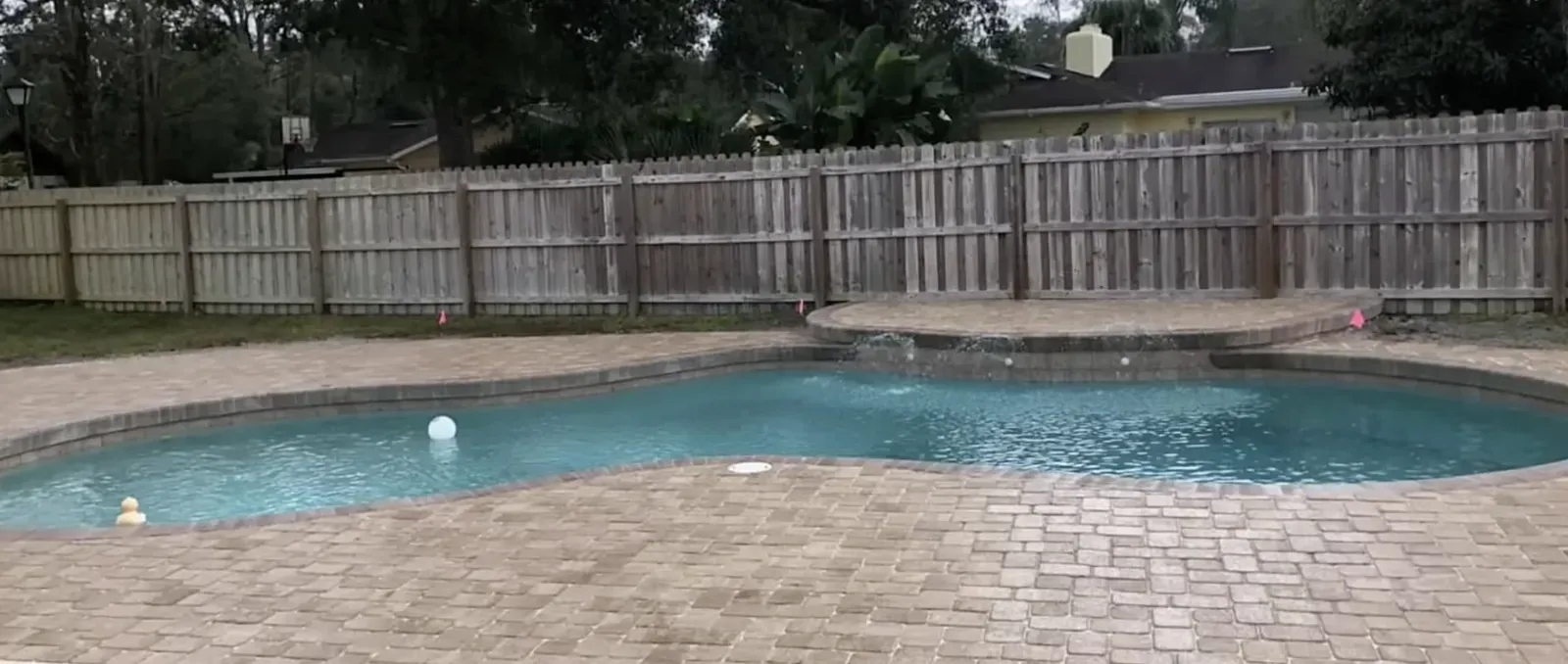
Pool Deck Pavers
Travertine, concrete, and porcelain around pools and lanais, including coping. Surface temperature matters more here than anywhere else on the property, and travertine runs noticeably cooler underfoot. Learn more
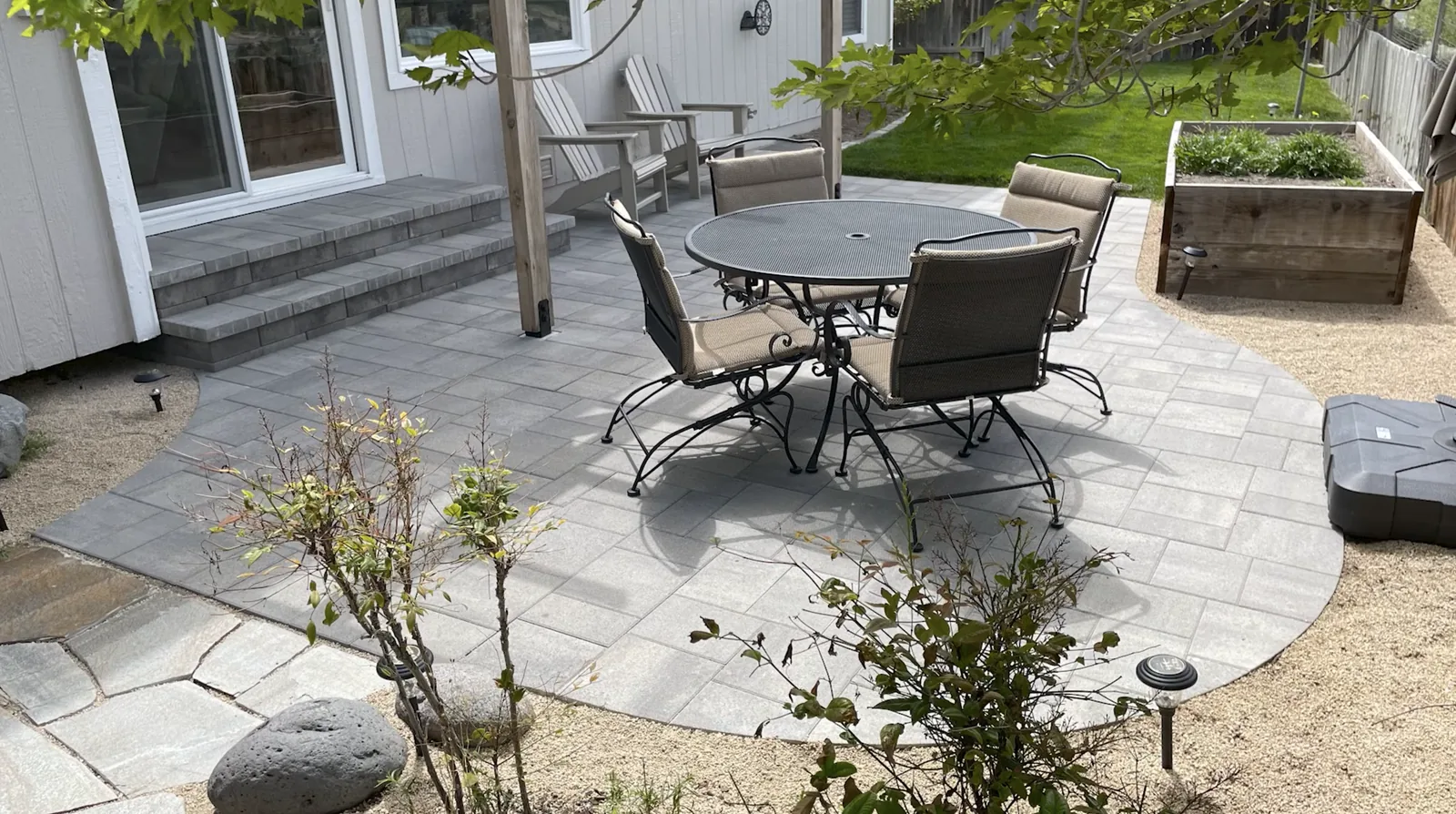
Paver Patios
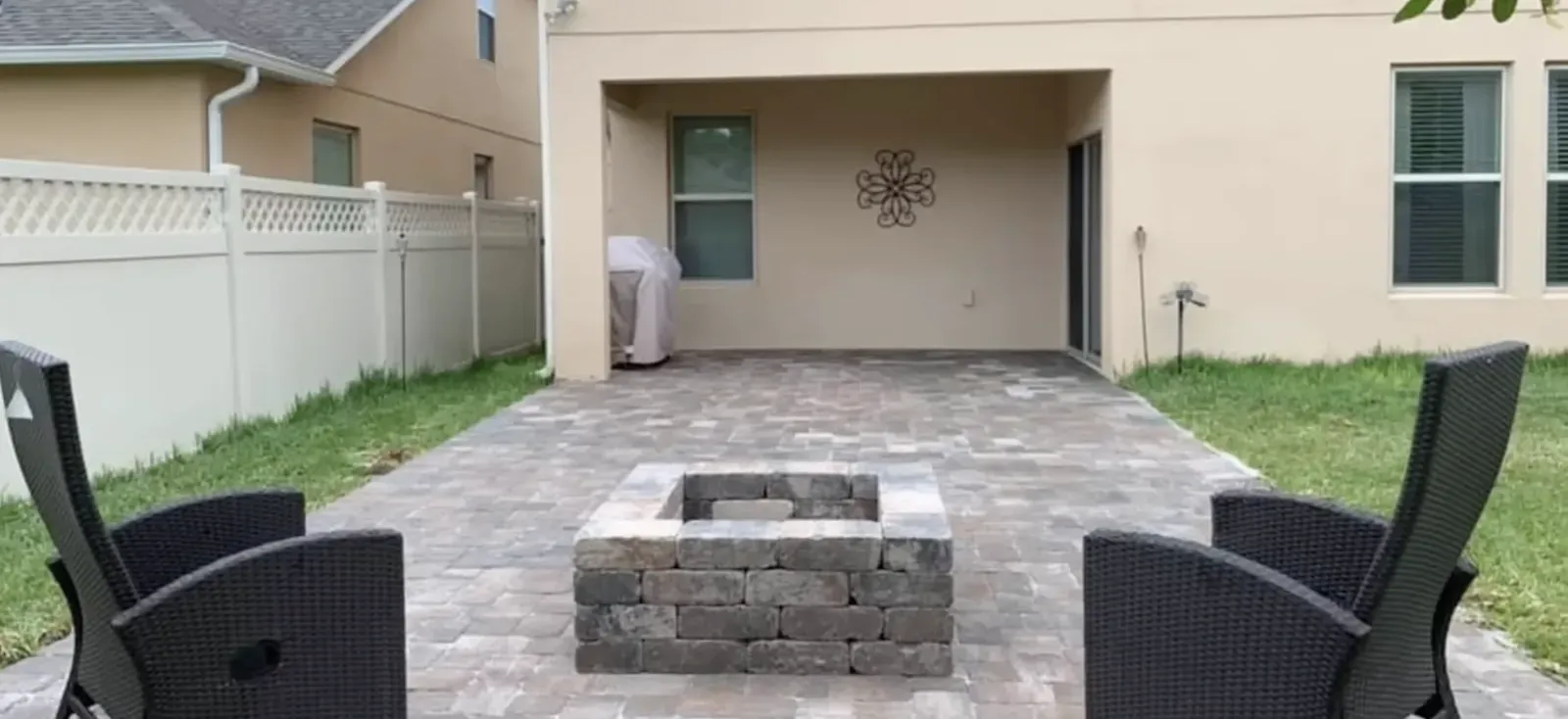
Rear patios, extensions, and outdoor living areas, sized and drained for Florida rain. Learn more
Paver Repair and Releveling
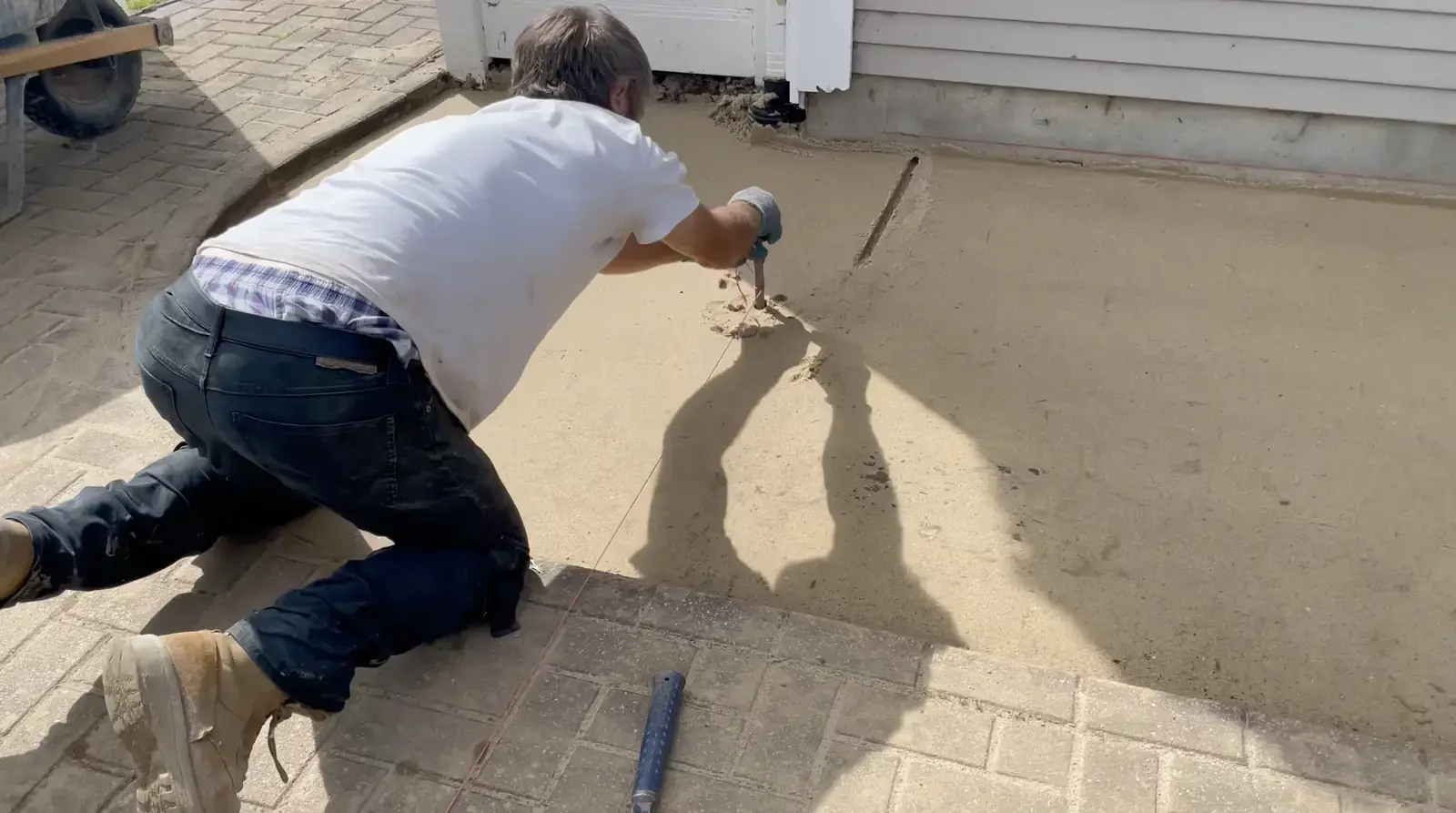
Lifting, resetting, and re-compacting settled sections, often a fraction of replacement cost when the failure is localized. Learn more
Driveway Extension and Widening
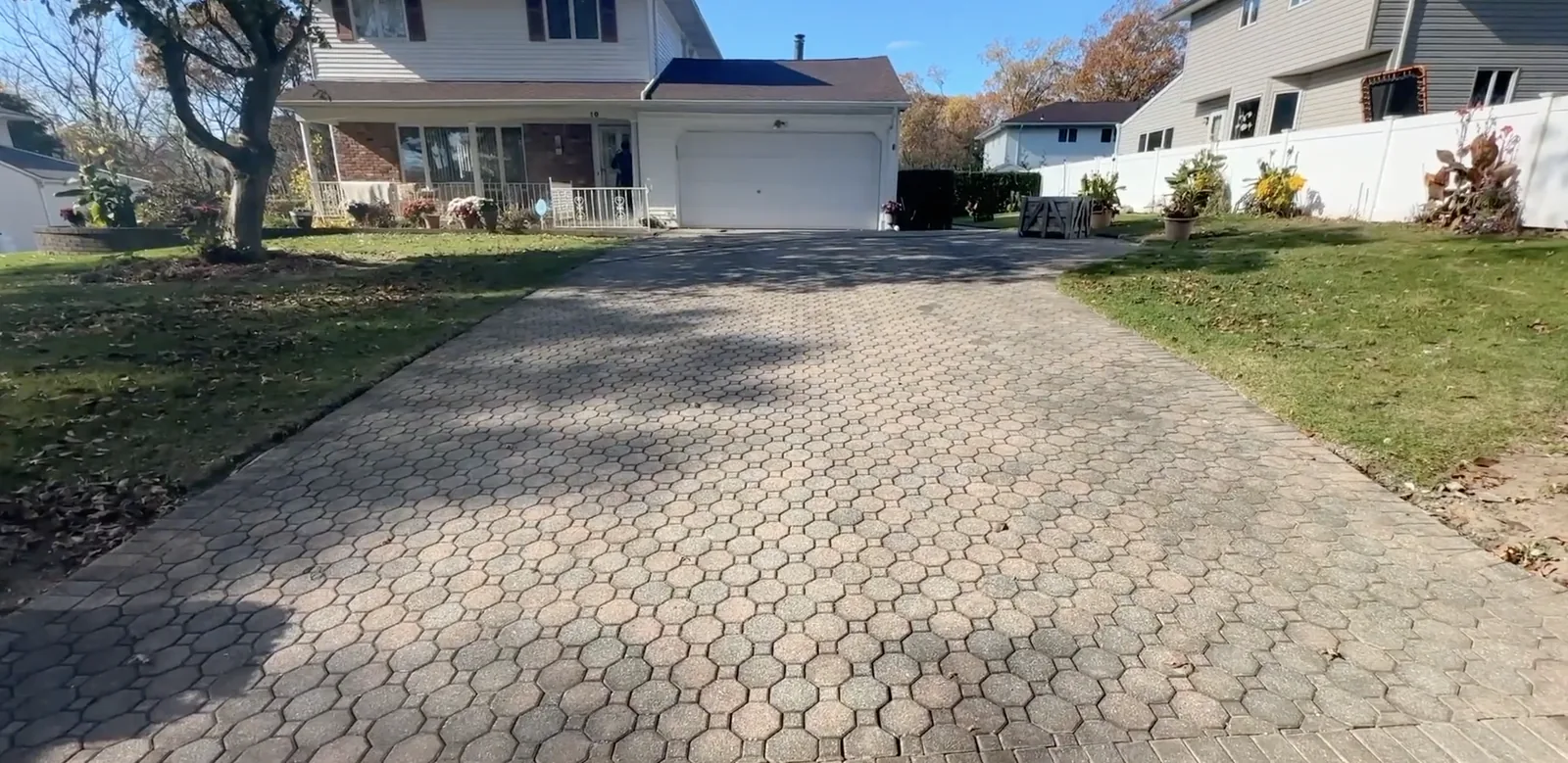
Adding parking without tripping the 40 percent open space limit. This is where permitting and design have to be solved together. Learn more
Paver Sealing and Cleaning
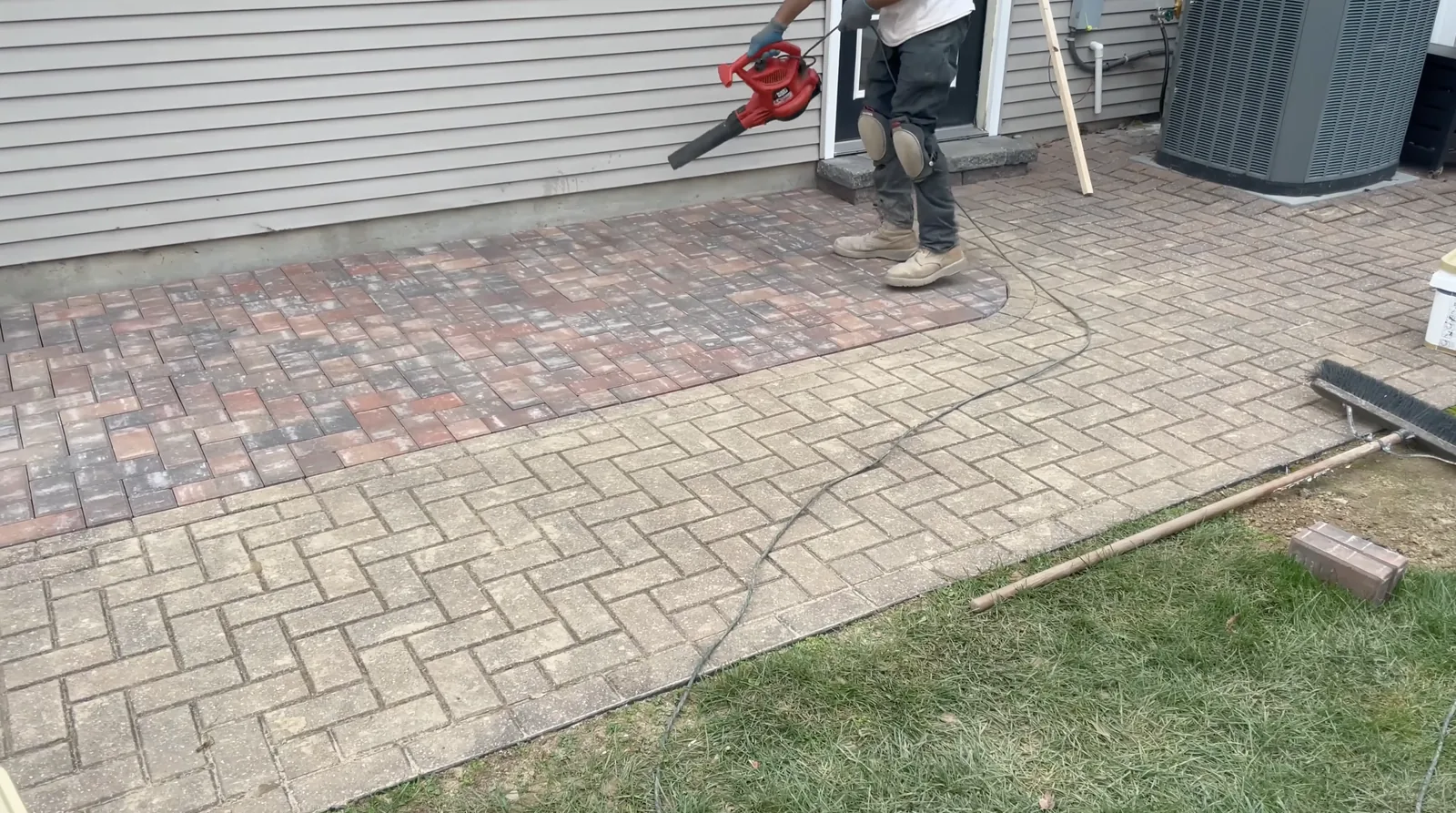
Cleaning, resanding, and sealing on the right schedule for Florida’s humidity and sun. Learn more
Choosing Between Concrete, Brick, Travertine, and Porcelain
Surface temperature is the Florida differentiator
Dark concrete pavers can get very hot in direct Florida sun, hot enough to be uncomfortable barefoot. Travertine stays meaningfully cooler under the same conditions, which is why it dominates the pool deck market here. Lighter concrete colors narrow the gap but do not close it. If a surface will be walked on barefoot, temperature should outrank appearance.
The practical comparison
- Concrete pavers: lowest cost, widest range of shapes and colors, individually replaceable. The default for driveways.
- Brick and clay pavers: color is baked into the material rather than applied on top, so it does not fade the way pigmented concrete can. Suits historic and traditional homes.
- Travertine: natural stone, coolest underfoot, the standard for pool decks. Usually specified tumbled or honed-and-filled.
- Porcelain: large-format, very low porosity, the top of the range.
⚠ One Florida-specific warning: Never apply a film-forming sealer to travertine. It is the most common regional mistake, and it produces a milky, whitened surface and trapped moisture within a single wet season. Travertine takes a penetrating sealer, or nothing.
How Long Does a Paver Project Take?
Most residential projects run three to seven days, driveways at the shorter end and large pool decks at the longer end. What extends a timeline: base work beyond standard excavation depth, permit and inspection scheduling, HOA architectural review that runs on the association’s calendar, and rain, particularly June through September. Sealing is a separate return visit weeks after installation.
The Best Time of Year to Install Pavers in Orlando
Orlando’s climate creates a real installation season, and it is not the one most people assume. October through May is the practical window, with drier conditions, workable temperatures, and no hurricane risk. The rainy season runs June through September, when roughly half the year’s rain falls; August alone averages around 8 inches across about 22 rainy days.
There is a second reason the timing matters. The rainy season is when existing installations reveal their flaws, because sustained heavy rain finds every weakness in a base or drainage plan. That is why repair enquiries cluster in those months. Booking in January or February for a spring install also gets ahead of the March to April rush, when demand for Orlando paver work peaks.
How to Hire a Paver Contractor in Orlando Without Getting Burned
What to verify before you sign
- Florida license and current insurance: ask for the number and the certificate, not a verbal assurance. You can confirm a license through Orange County’s public licensed-contractor database.
- Certification: the Concrete Masonry and Hardscapes Association (CMHA) is the current industry body, formed when ICPI and NCMA unified. A contractor still advertising ICPI certified is naming a body that no longer exists under that name.
- Who does the work: in-house crew or subcontractors. Both can be fine; you should know which.
- A written scope: base depth and material stated explicitly in the estimate.
Red flags
- A single-line price with no itemization.
- A base depth under six inches quoted for a driveway.
- Plastic spike edging specified for a Florida install.
- Materials dumped on the lawn well before the crew arrives.
- Full payment demanded up front.
- No mention of permits at all.
What good crews consistently do
Reviews of Orlando paver contractors cluster around a remarkably consistent set of behaviors, and they are not about pavers: answering the phone, honoring the quoted price without change orders, showing up when they said they would, cleaning the site daily, and protecting plants and driveways. Notice what customers rarely praise: the price. What they praise is communication.
Why Homeowners Use Us Instead of Calling Around
Every installer we refer is licensed, insured, and vetted. We confirm licensing against Orange County’s public database before we send anyone your way.
You get itemized estimates. We ask installers to break out base, materials, and labor so you can compare like with like.
We are not the contractor. No crew to keep busy, no inventory to move, so we have no reason to steer you toward a larger job than the one you need.
OUR WORK
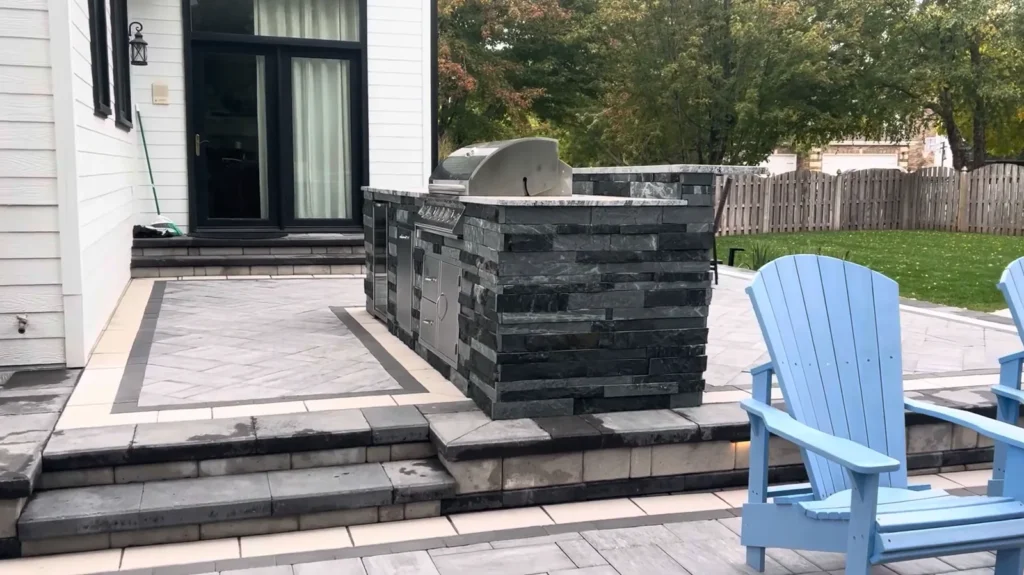
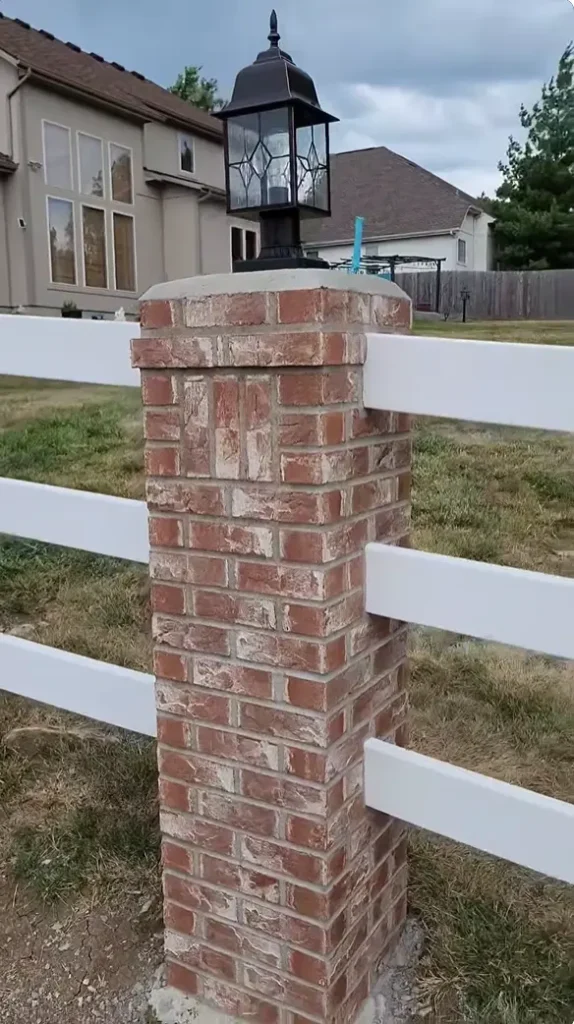
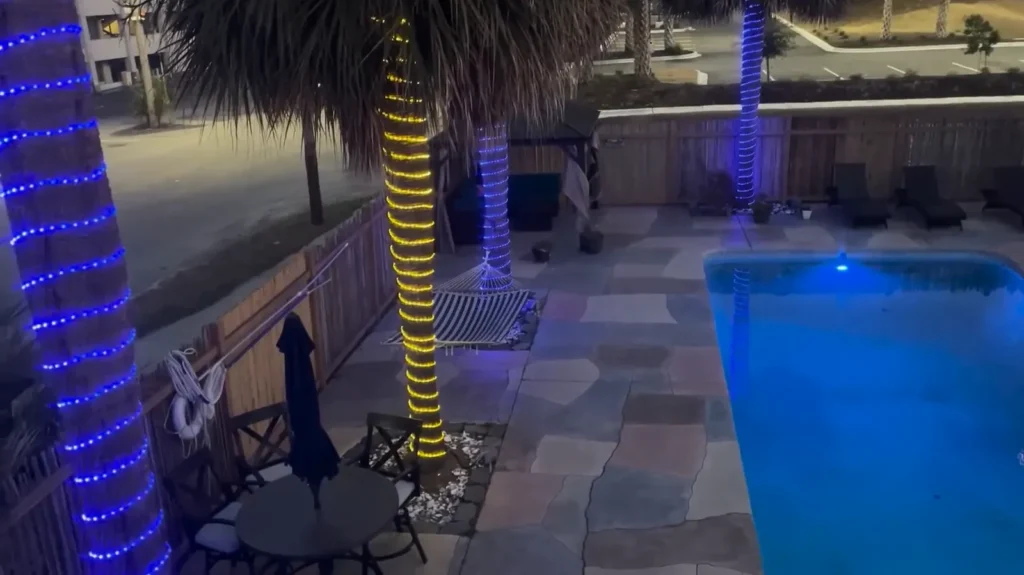
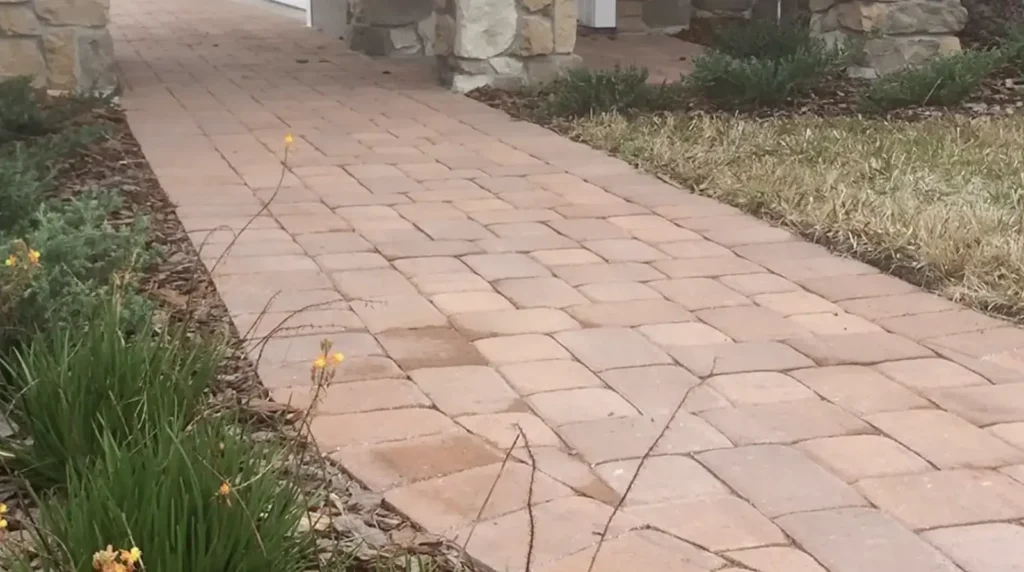
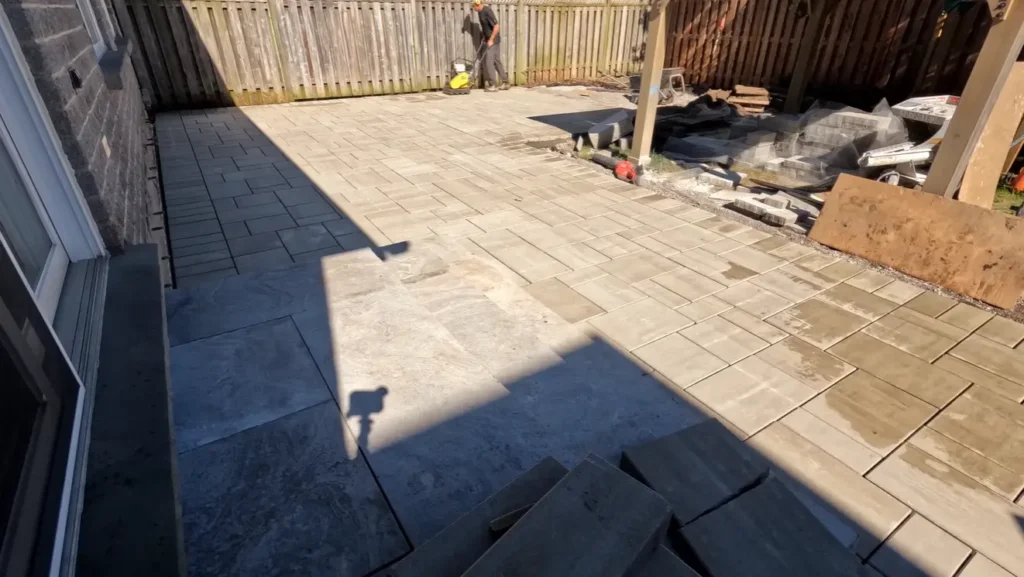
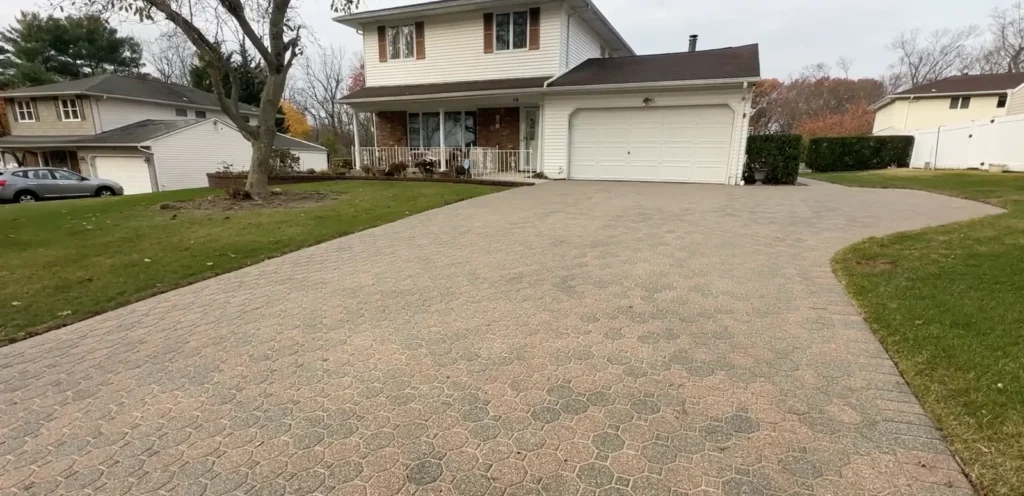
Recent Paver Projects
How It Works
- Tell us about your project: the service, rough size, and your neighborhood.
- We match you with a vetted local installer who covers your area.
- You get an on-site measurement and an itemized estimate, at no cost.
- Permits and HOA paperwork: your installer files the zoning or engineering permit and can prepare your ARC submission.
- Installation, typically three to seven days depending on scope.
- Final walkthrough, with sealing scheduled as a separate visit a few weeks later.
Paying for a Paver Project
Phasing works better with pavers than with concrete
Pavers are manufactured in controlled batches to consistent dimensions and colors. That means a driveway installed this year and a pool deck installed next year can be matched, and the finished result reads as one project, not two. Poured concrete cannot do this; slabs poured at different times differ in color and finish permanently. If budget is the constraint, phasing is a real option, not a compromise.
Where not to economize
Step down the material before you step down the base. Concrete pavers on a properly compacted six to eight inch base will outlast travertine laid on a starved one. The base is the part you cannot fix later without lifting everything.
What Paver Maintenance Actually Involves
Sealing schedule
The first seal goes on roughly four to six weeks after installation, once efflorescence has surfaced and cleared. Sealing too early traps it. After that, reseal every two to three years, sooner around pools and constant water exposure.
Efflorescence
A white, powdery haze on new pavers is efflorescence, mineral salts rising to the surface as the pavers cure. It is normal, it is not a defect, and it clears on its own or with a dedicated cleaner. It is also the reason you wait before the first seal.
Joints
Joint sand is what makes an interlocking pavement interlock. It washes out over time, especially where water runs across the surface. Periodic resanding is routine maintenance, not a repair.
Areas We Cover Across Metro Orlando
Grouped by permitting authority, because that is what determines your process. City limits and unincorporated county are handled differently, as covered in the permit section above.
Orange County
Seminole County
Osceola County
Where to Buy Pavers in Orlando
Sourcing materials yourself instead of hiring an installer? Orlando has several supply yards and manufacturers serving both the trade and the public. We keep a plain, up-to-date list so you can compare selection and pricing. See our Orlando paver supplier list.
Common Questions About Pavers in Orlando
Get a Free Paver Estimate in Orlando
Tell us the service, rough size, and your neighborhood. We will match you with a vetted local installer who covers your area and can come out to measure, at no cost and no obligation.