How to Read a Paver Estimate (and Spot a Starved Base)
How to Read a Paver Estimate (and Spot a Starved Base)
The single most important line on a paver estimate is the base, its depth and material, because that is the part you cannot see and the first thing a cheap bid cuts. A quote that lists everything as one price, or does not specify base depth, is usually cheap for a reason. Here is how to read a paver estimate line by line, spot a starved base, and compare quotes on what actually matters.
Why the Base Is Everything
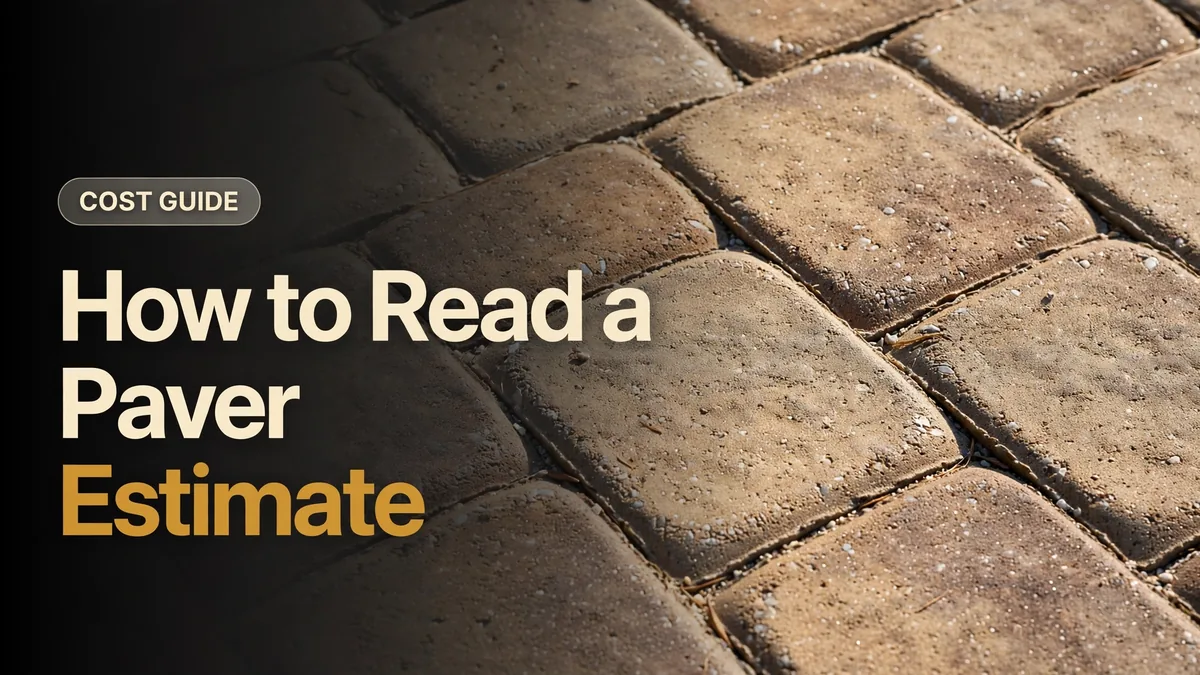
Before the line items, understand what you are really buying. In Central Florida’s sandy soil, a paver surface lasts or fails based on what is underneath it, not the pavers on top. A driveway carrying vehicles needs a 6 to 8 inch compacted limestone base over geotextile fabric. That base work is a major share of the total cost and completely invisible once the pavers go down. A crew that quotes a 2 to 3 inch base can undercut a crew quoting a proper 6 to 8 inch base and look cheaper, but they are not quoting the same job. This is the starved base, and it is the number-one reason driveways rut and sink within a few years, as covered in our why pavers sink guide.
The Line Items a Good Estimate Includes
A quality paver estimate breaks the job into separate lines so you can see where the money goes. Look for these:
- Excavation: digging out to the right depth, including removing any soft or organic soil
- Base material and depth: the type (compacted limestone/limerock) and the actual inches, stated explicitly
- Geotextile fabric: the separation layer under the base
- Bedding sand: the screeded setting layer for the pavers
- The pavers: material, brand or line, and pattern
- Edge restraint: concrete edging for Florida soil, not plastic spikes
- Joint sand: polymeric or joint-stabilizing sand swept into the joints
- Compaction: mechanical compaction of base and pavers
- Demolition and haul-away: if removing an existing surface
- Permit: who pulls it and whether it is included
You do not need every one of these itemized to the penny, but base depth, material, and edge restraint should never be vague.
The Red Flags That Signal a Cut-Corner Quote
Watch for these on any quote you are comparing.
A single-line price
“Paver driveway, $6,000” tells you nothing about the base. This is the classic sign of a job planning to cut where you cannot see.
No stated base depth
No base depth stated, or a depth under 6 inches for a driveway, is a warning sign in Florida for anything carrying vehicle traffic.
Plastic spike edging
Florida’s sandy soil does not hold spikes. Concrete edging is the correct spec for this climate and soil.
No geotextile fabric
Skipping the fabric lets the base contaminate into the sand below, undermining the whole structure over time.
No permit line
No permit line, or a claim that none is needed, when in Orlando pavers need a permit, is a sign the quote is skipping a required step.
A dramatically low price
A price far below every other quote is almost never a better deal. It is a thinner base or excluded scope.
How to Compare Two Quotes Fairly
When you have several estimates, do not compare the bottom-line totals first. Compare the base line first. Line up the base depth and material across every quote. A quote at $9,000 with an 8-inch base over geotextile is cheaper in real terms than a quote at $7,000 with a 3-inch base and no fabric, because the $7,000 job will fail years sooner and cost you a rebuild. Once the base is equal, then compare material, pattern, and the rest. This is also why the cost guide ranges are ranges: two honest quotes can differ because one includes deeper base, demolition, or drainage the other leaves out.
Questions to Ask Before You Sign
- How deep is the compacted base, and what material?
- Is geotextile fabric included?
- What edge restraint do you use?
- Is demolition and haul-away of my old surface included?
- Who pulls the permit, and is it in this price?
- Is sealing included, or a separate later visit?
- What is your workmanship warranty?
A confident, competent installer answers these without hesitation. Hesitation or vagueness on the base question is the biggest tell.
What a Fair Estimate Looks Like in Practice
A solid Orlando driveway estimate reads something like: excavation to depth with soft-soil removal, geotextile fabric, 6 to 8 inch compacted limestone base, 1-inch bedding sand, the specified concrete pavers in a stated pattern, concrete edge restraint, polymeric joint sand, mechanical compaction, debris haul-away, and the permit, with sealing noted as a separate visit. Each major component is visible, the base depth is explicit, and nothing structural is left to assumption.
That transparency is worth paying a bit more for, because it is the difference between a driveway that holds its lines for decades and one that starts sinking in its third wet season.
Frequently asked questions
Related Guides
 Paver Cost in Orlando 2026 (Real Price Ranges)Why Paver Quotes Vary 40% for the Same JobHow to Phase a Paver Project on a BudgetFinancing a Paver Project in OrlandoWhere to Buy Pavers in Orlando (Supplier List)
 Do You Need a Permit for Pavers in Orlando?Paver Cost in Orlando 2026 (Real Price Ranges)Why Paver Quotes Vary 40% for the Same JobHow to Phase a Paver Project on a BudgetFinancing a Paver Project in OrlandoWhere to Buy Pavers in Orlando (Supplier List)Do You Need a Permit for Pavers in Orlando?
Get a Free, Itemized Paver Estimate in Orlando
Read a paver estimate from the base up, not the total down. The base depth and material are the most important lines and the first thing a cheap quote cuts. Want estimates you can trust? Tell us about your project and we will match you with a vetted local installer who gives you an itemized quote with the base spec spelled out. Call (689) 686-8021 or request a quote online.