Orange County’s 40% Open Space Rule for Pavers, Explained
Orange County’s 40% Open Space Rule, Explained
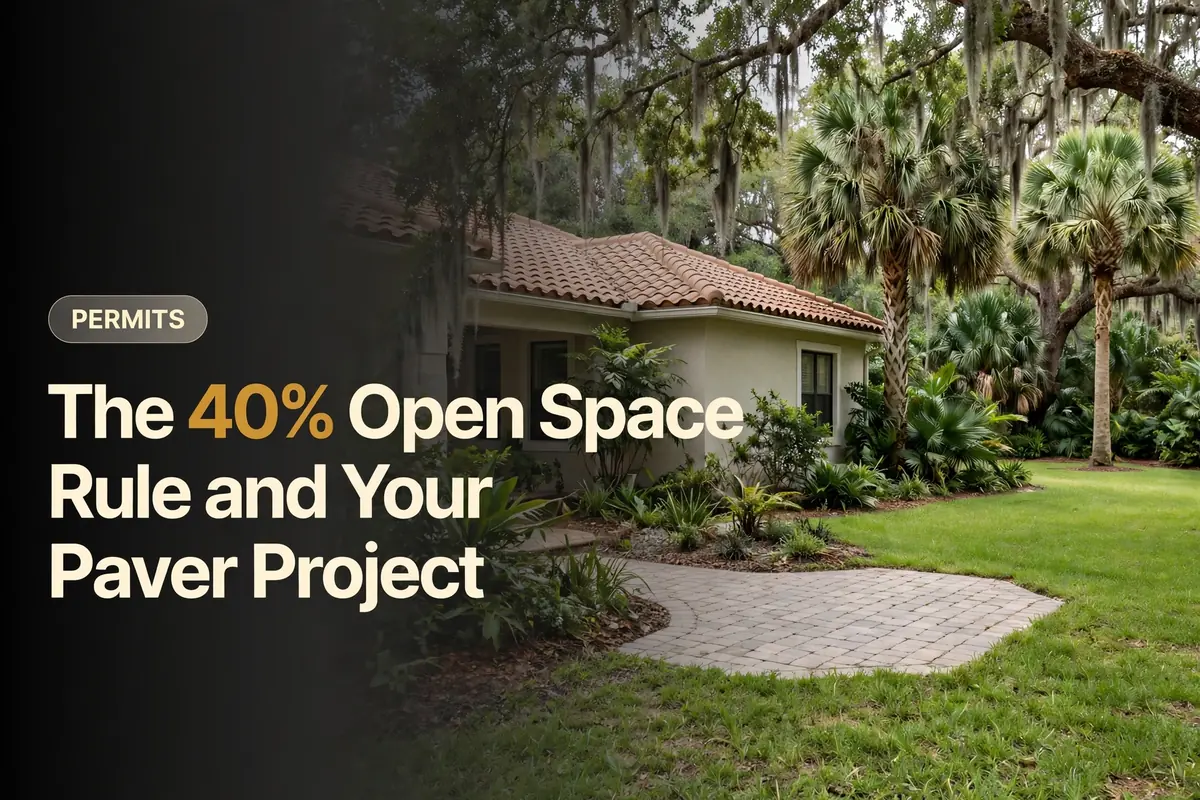
Orange County requires every residential lot to keep 40% of the yard as private open space, and paved surfaces like driveways and patios count against that limit. So on a smaller lot, a big driveway or a large patio addition can put you over the line and get your permit denied. That is the rule in a sentence. Below is exactly how it is measured, why projects fail it, and the legitimate ways to fit a bigger project within it.
This rule applies in unincorporated Orange County. Inside the City of Orlando, the equivalent control is the Impervious Surface Ratio, covered in our City of Orlando engineering permit guide.
What the Rule Actually Says
This comes straight from the county code, and the exact wording matters. Under Orange County code section 24-29(a), residential private open space shall be 40 percent. The code defines residential private open space as the usable open space on individual lots maintained by the required front, rear, and side yards of the residential zoning district.
In plain terms: at least 40 percent of your yard, measured across the front, rear, and side yards, has to remain usable open space. It cannot all be covered with hard surface. This is checked when you apply for a paver permit, as part of the review for placement and location.
What Counts Against Your Open Space, and What Counts Toward It
This is the part that decides whether your project fits, so it is worth being precise.
Counts against open space
Paved driveways, paver and concrete patios, and principal and accessory structures like the house, sheds, and garages all reduce your open space.
Counts toward open space
Swimming pools, tennis courts, and porches do not reduce your open space the way paved surfaces and structures do.
Why Projects Fail the Rule
The 40 percent rule is the most common reason a paver permit gets denied in unincorporated Orange County, and it almost always comes down to lot size. On a large lot, you can add a generous driveway and a big patio and still leave far more than 40 percent open. On a smaller lot, the house already takes a big share, and once you add a full driveway, walkways, and a patio, you can be close to the limit before you plan anything new. That is when a driveway extension, a wide parking pad, or a large new patio tips the lot over 40 percent and the application comes back denied.
This is why the smart move is to run the numbers before you design the project, not after. A denial after you have settled on a layout means going back to the drawing board.
How to Fit a Bigger Project Within the Rule
Getting denied does not always mean giving up the project.
Permeable pavers
A permeable paver system lets water pass through into a stone reservoir below instead of shedding it as runoff, treated more favorably for stormwater and open-space purposes than solid paving.
A ribbon driveway
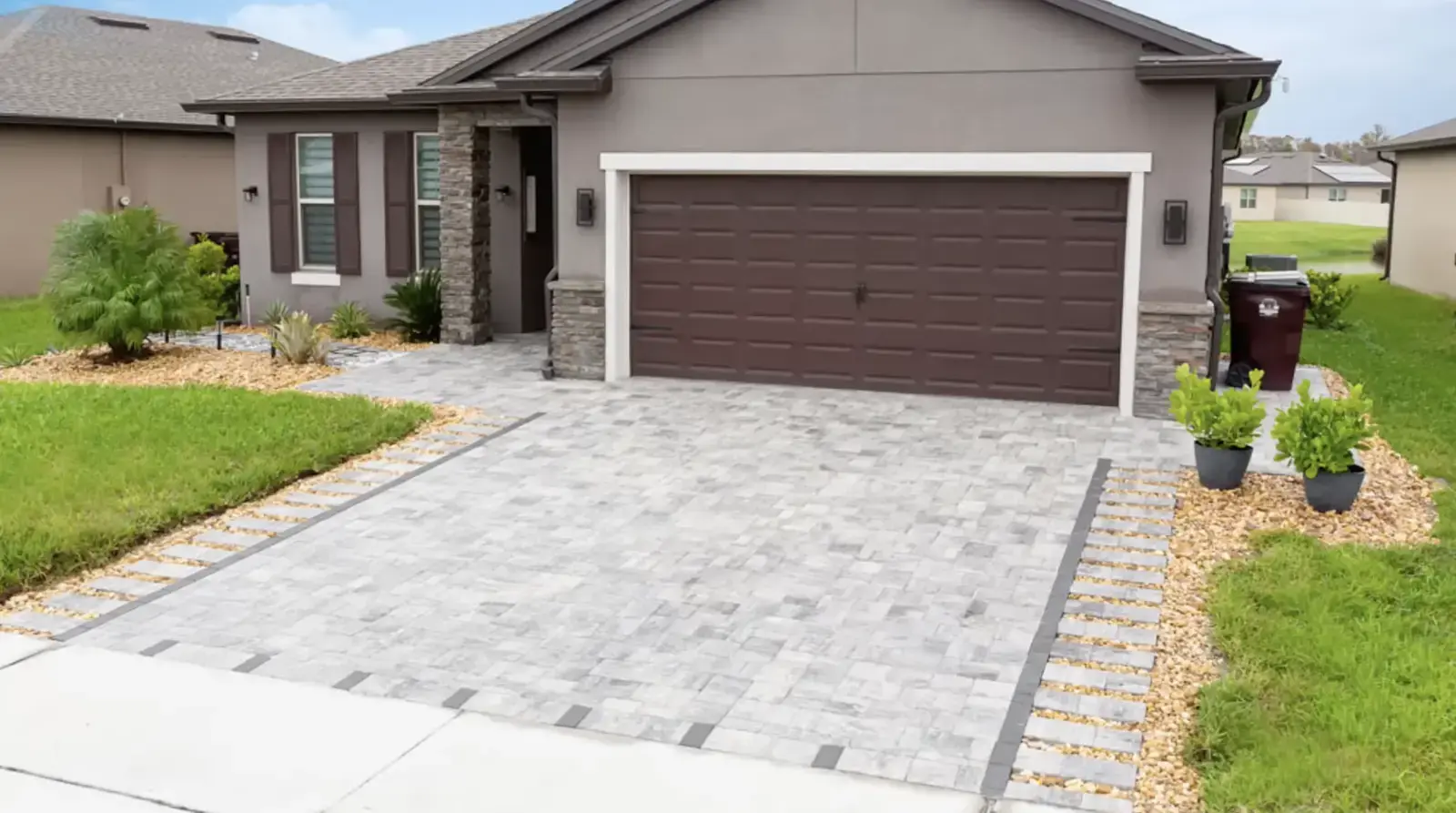
Two paved strips where the tires run, with grass or another permeable material down the middle, gives you a functional driveway while paving less total area.
Rebalancing the design
Sometimes the fix is reducing paved area in one place to add it in another, or choosing a pool or porch, which count toward open space, over additional paving.
How It Fits Into the Permit
The 40 percent rule is not a separate application; it is one of the standards your paver permit is reviewed against. When you submit your Orange County paver permit with its dimensioned site plan, the Zoning Division reviews placement, location, materials, and open space together. A site plan that shows the lot exceeding 40 percent coverage gets flagged in the four-business-day review.
Frequently asked questions
Related Guides
 Do You Need a Permit for Pavers in Orlando?
 Orange County Paver Permit: Process & Fees (2026)City of Orlando Paver Permit: The Engineering ProcessDriveway Apron & Right-of-Way Permits in OrlandoHOA Approval for Pavers in Orlando (FL Statute 720)Paver Cost in Orlando 2026 (Real Price Ranges)Do You Need a Permit for Pavers in Orlando?Orange County Paver Permit: Process & Fees (2026)City of Orlando Paver Permit: The Engineering ProcessDriveway Apron & Right-of-Way Permits in OrlandoHOA Approval for Pavers in Orlando (FL Statute 720)Paver Cost in Orlando 2026 (Real Price Ranges)
Get a Free, Itemized Paver Estimate in Orlando
Orange County’s 40 percent open space rule means at least 40 percent of your yard has to stay open. It is the top reason paver permits get denied on smaller lots. Want someone to run the math and handle the permit? Tell us about your project and we will match you with a vetted local installer. Call (689) 686-8021 or request a quote online.