How to Phase a Paver Project on a Budget (Orlando)
How to Phase a Paver Project on a Budget
If the full paver project is out of budget, you can phase it over time, and because pavers are manufactured in consistent batches, work you add later still matches the original. Do the driveway this year, the pool deck next year, and it reads as one project rather than something pieced together. This is one of the real advantages pavers have over poured concrete. Here is how to phase smartly, what to spend on first, and the one thing you should never compromise to save money.
Why Phasing Works With Pavers (but Not Concrete)
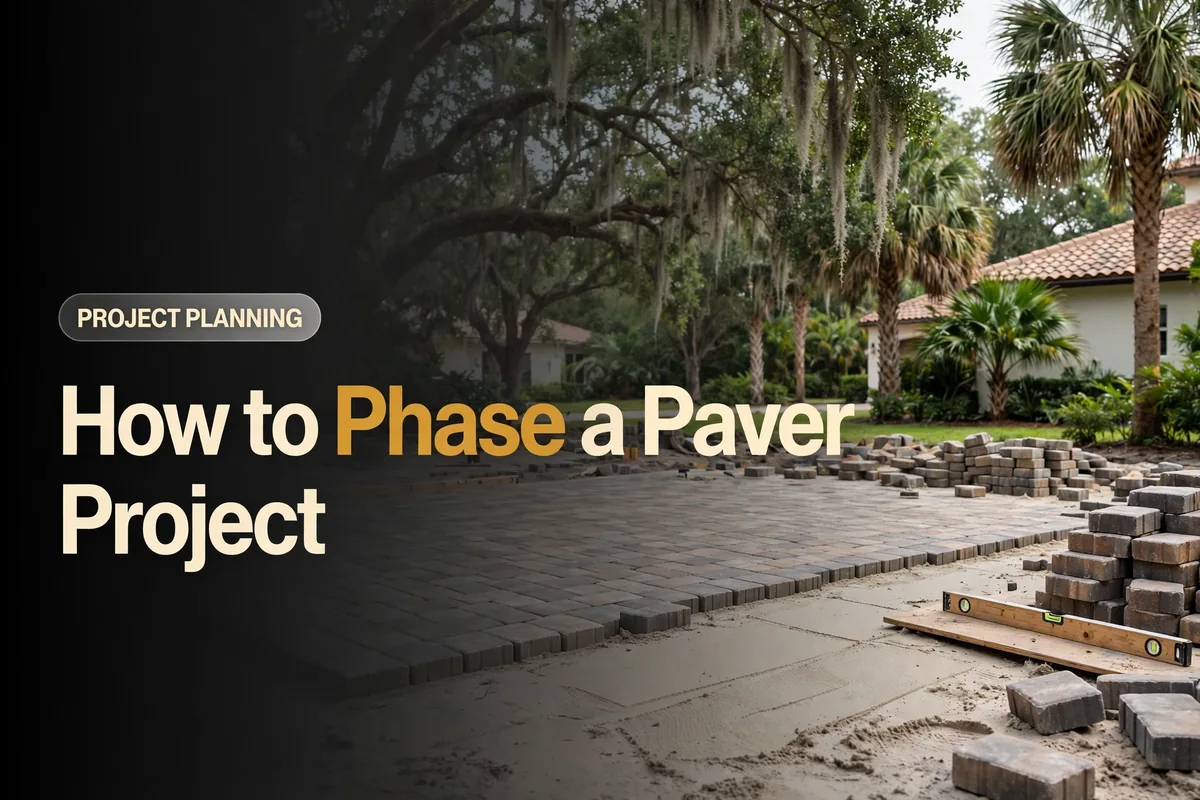
This is the key fact that makes phasing possible, and it is unique to pavers. Pavers are manufactured in controlled batches to consistent dimensions and color formulations. That means a driveway installed this year and a pool deck installed next year can be matched, so the finished result looks like one cohesive design, not two separate jobs. Poured concrete cannot do this. Slabs poured at different times differ in color and finish permanently, and a patch always shows. With pavers, phasing is a genuine budget strategy rather than a compromise you can see in the final result.
What to Do First
If you are phasing, sequence the work by value and by what protects the rest of the project. Start with the highest-impact or most-needed surface. For most homeowners that is the driveway, because it is the largest, most visible, and often the one replacing failing concrete. For others it is the pool deck, if a cracked or scorching deck is the daily pain point.
Plan the whole design up front, even if you build it in pieces. Knowing the full layout from the start means each phase ties into the next cleanly, the base, the grade, and the drainage are planned as a whole. This is what keeps a phased project from looking or functioning like disconnected patches.
Consider what a later phase depends on. If a future patio will share drainage with the driveway, or an outdoor kitchen will sit on a patio you have not built yet, planning those connections now avoids tearing into finished work later.
The One Thing You Must Never Cut
Here is the rule that makes budget phasing work instead of backfiring: step down the material before you step down the base. Concrete pavers on a full 6 to 8 inch compacted base will outlast travertine laid on a starved base every time. The material is what you see; the base is what holds it up. If money is tight on a given phase, choose a more affordable paver, not a thinner base. A cheap base is not a saving, it is a future repair bill, as our how to read a paver estimate guide explains. So the budget lever on each phase is material and footprint, never structure.
Other Ways to Stretch the Budget
A few more levers that lower cost without touching the structure.
Shrink the footprint, keep the spec
A 400 square foot patio built right beats a 550 square foot patio built wrong, and because pavers extend gracefully, you can enlarge it in a later phase on the same quality base.
Choose a cost-effective material and pattern
Budget concrete pavers in a simple running-bond layout are the most affordable combination. You can always use a premium material on a smaller feature phase, like a pool deck, where it matters most.
Time phases for the season
Orlando’s dry season, roughly October through May, is the practical install window.
Look at financing
On a surface with a 25 to 30 year lifespan, reasonable home-improvement financing can be a sensible alternative to phasing, or a complement to it.
The One Real Cost of Phasing
Phasing is a smart strategy, but be clear-eyed about its one downside so it does not surprise you. Each phase is a separate mobilization, the crew, the equipment, the setup and cleanup happen more than once. So the total across several phases costs a bit more than doing everything in a single visit.
That premium is usually modest and well worth it if the alternative is cutting the base or not doing the project at all, but it is the honest trade-off. If doing it all at once with financing costs about the same as phasing with repeated mobilizations, financing may be the better route.
A Typical Phasing Plan in Practice
A common Orlando approach looks like this.
Year one
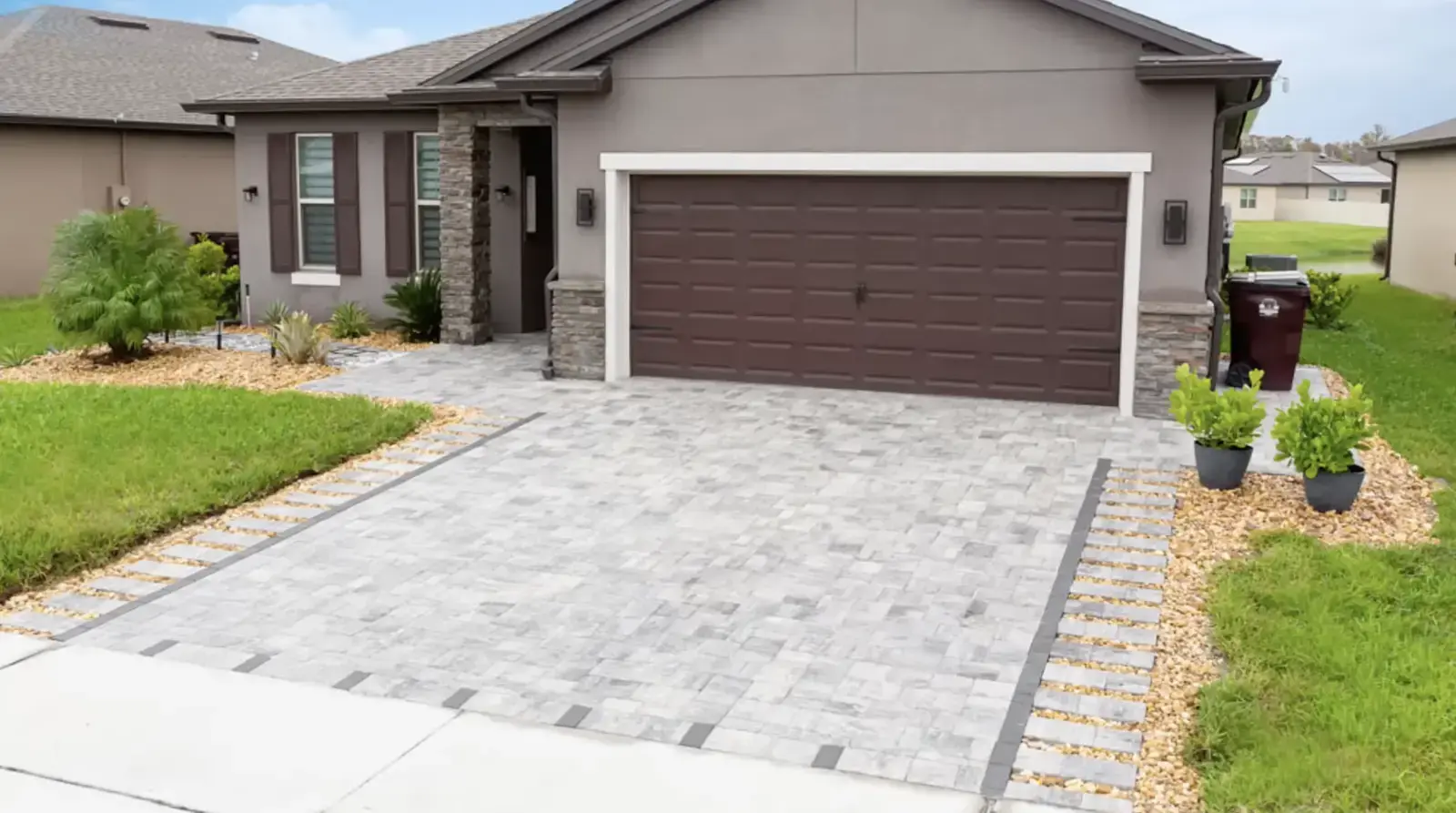
Replace the cracked concrete driveway with concrete pavers on a full base, the highest-impact surface.
Year two
Add the pool deck in travertine, matched to work already done and drained as planned from the start.
Year three
A patio and fire pit to finish the outdoor-living space.
Because the whole design was planned in year one, each phase ties in cleanly, the pavers match across years, and the finished result looks like one deliberate project rather than three separate jobs.
Frequently asked questions
Related Guides
 Paver Cost in Orlando 2026 (Real Price Ranges)
 How to Read a Paver Estimate (and Spot a Starved Base)Why Paver Quotes Vary 40% for the Same JobFinancing a Paver Project in OrlandoWhere to Buy Pavers in Orlando (Supplier List)
 Do You Need a Permit for Pavers in Orlando?Paver Cost in Orlando 2026 (Real Price Ranges)How to Read a Paver Estimate (and Spot a Starved Base)Why Paver Quotes Vary 40% for the Same JobFinancing a Paver Project in OrlandoWhere to Buy Pavers in Orlando (Supplier List)Do You Need a Permit for Pavers in Orlando?
Get a Free, Itemized Paver Estimate in Orlando
Phasing is a genuine way to do a paver project on a budget, because batch-manufactured pavers let later phases match the original. Tell us your full vision and budget and we will match you with a vetted local installer who plans the whole design and builds it in the phases that fit you. Call (689) 686-8021 or request a quote online.