Driveway Apron & Right-of-Way Permits in Orlando (2026)
Driveway Apron & Right-of-Way Permits in Orlando
The part of your driveway between your property line and the street sits in the public right-of-way, so paving it usually needs a separate right-of-way permit on top of your regular paver permit. That strip is called the apron, and it is not your land, which is why it comes with its own rules. Most homeowners do not realize their driveway project involves two approvals until it stalls. Below is what the apron is, when you need the extra permit, and the catch with putting decorative pavers in public land.
What the Driveway Apron Is
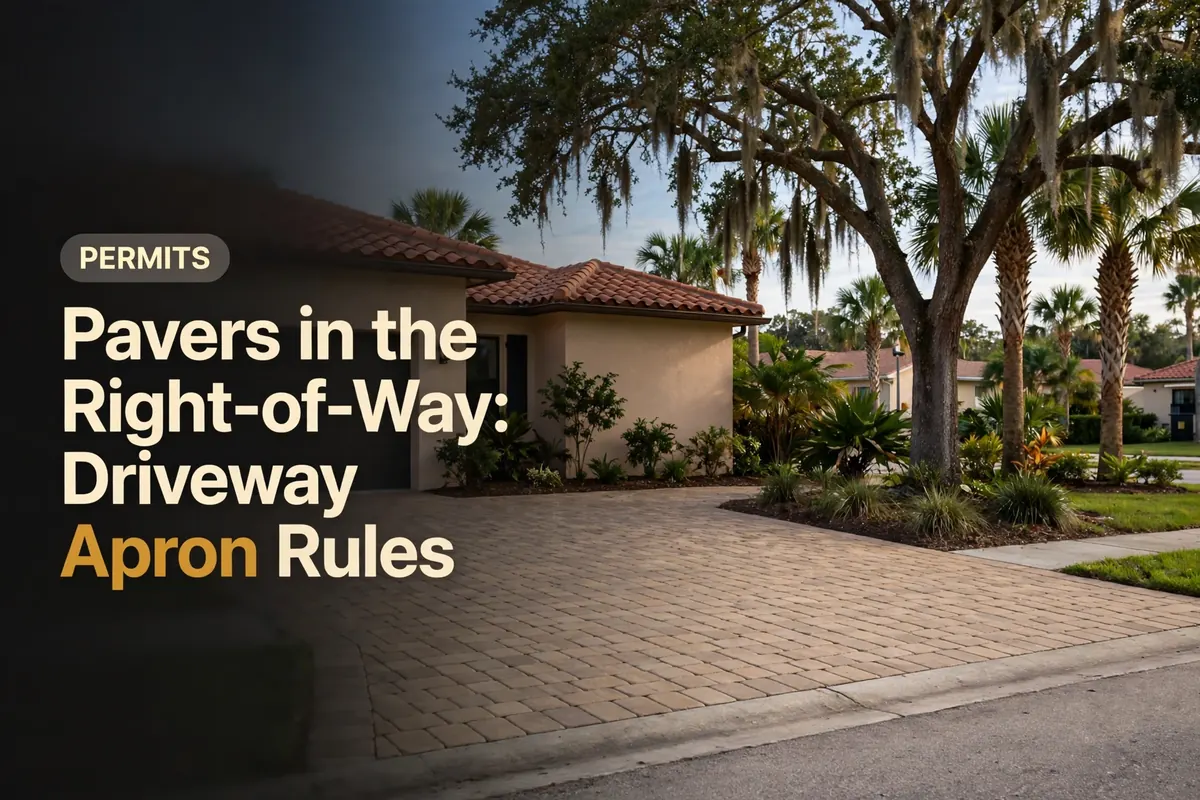
The apron is the transition where your driveway meets the road, and legally it is a different piece of ground than the rest of your driveway. Your driveway sits on your property up to your property line. Beyond that line, toward and including the street, is the public right-of-way: the street itself, the area under the sidewalk, and the grassy strip next to the street. That right-of-way is owned and controlled by the government, not by you, even though it sits in front of your house and you maintain it.
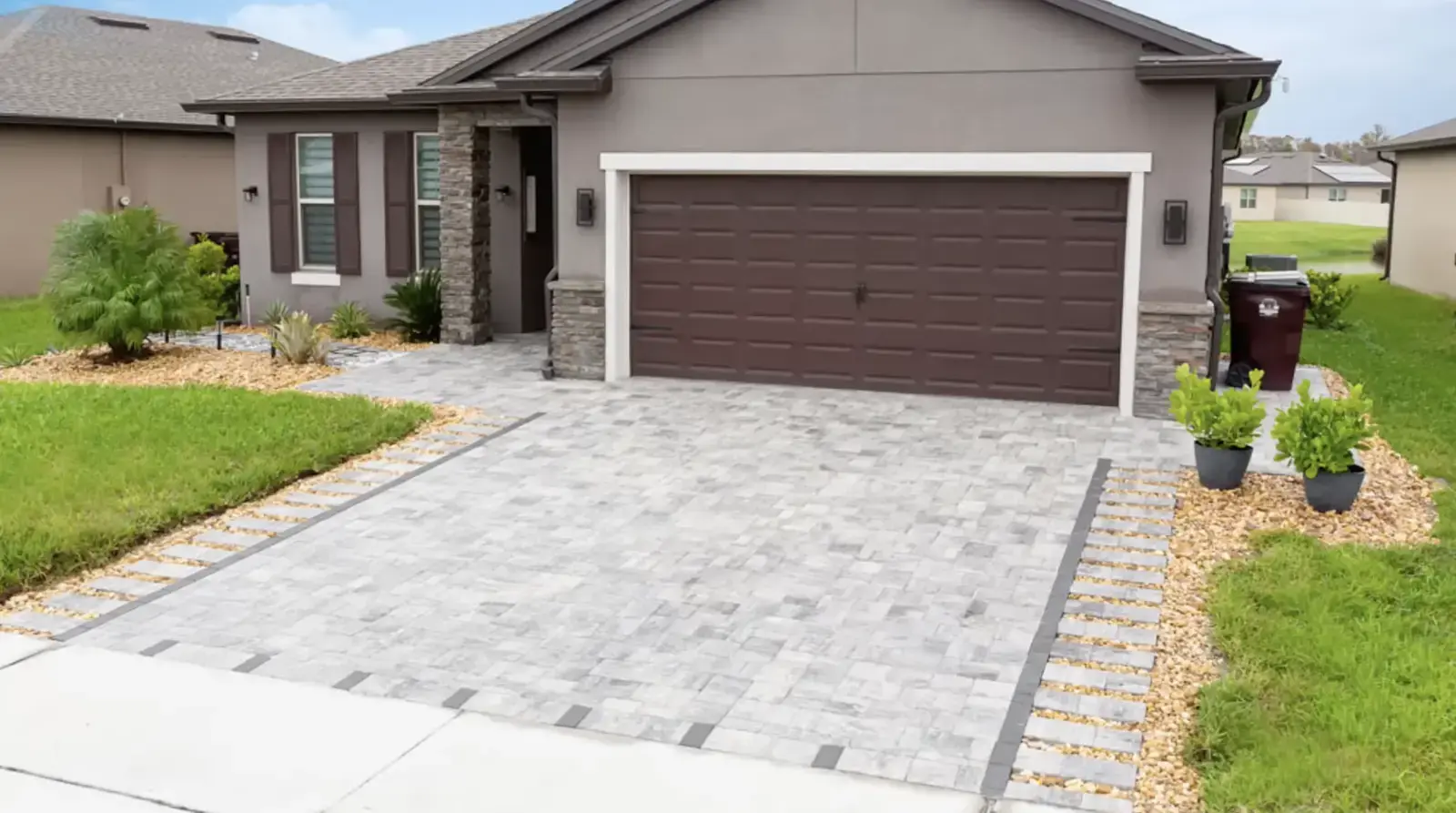
The apron, the flared section of driveway that connects to the road, typically falls in or crosses that right-of-way. That is why paving or repaving it is treated differently from the paver work on the rest of your driveway.
When You Need a Right-of-Way Permit
The rule is simple: if your work touches the public right-of-way, you need a right-of-way permit for that portion. The City of Orlando is explicit that if you need to do work in the street, under the sidewalk, or in the grassy area next to the street, you apply for a Right-of-Way Permit to meet safety and quality standards. So a new paver driveway that reaches the road, a driveway extension that widens the apron, or a repave that touches the approach all trigger it.
This is separate from, and in addition to, the permit for the pavers on your own property. Inside the City of Orlando that main permit is an Engineering Permit; in unincorporated Orange County it is a Zoning permit. The apron just adds the right-of-way layer on top.
The Catch: Decorative Pavers in the Right-of-Way
Here is the part that genuinely surprises people who want a seamless paver apron matching their driveway. When you place decorative pavers in the City of Orlando right-of-way, the city can require a Right-of-Way Driveway Pavers Agreement. This is not an easement and not any kind of ownership. The city is explicit that it is a license, terminable at will.
What that means in practice: those pavers are in public land on the city’s permission, which it can withdraw at any time. If the agreement is terminated, or if a utility or the city needs to access the right-of-way, you are responsible for removing the pavers and restoring the area at your own cost. If you do not, the city can remove them, bill you, and place a lien on your property for unpaid costs. The agreement gets recorded in the public records and runs with the property.
None of this means you should avoid a paver apron. Plenty of homeowners have them. It means you should go in knowing the apron portion lives on different terms than the rest of your driveway, and that a utility dig could disturb it.
State Roads Add Another Layer
If your driveway connects to a state road rather than a city or county street, there is one more approval. The Florida Department of Transportation requires a driveway connection permit for access to a state road. This applies to homes fronting state highways and major state-maintained roads. If you are not sure whether your street is state-maintained, an installer familiar with your area or the local permitting office can confirm, and it is worth checking early because it adds time.
Why the Apron Trips Up So Many Projects
The apron is the classic reason a driveway project takes longer than the homeowner expected, and it comes down to two assumptions.
- People assume the whole driveway is theirs, so they plan one permit and get surprised by the right-of-way requirement.
- People assume a paver apron is just a continuation of the driveway, not realizing it may need the separate pavers agreement with its removal-and-restoration terms.
A contractor who regularly does driveways in your jurisdiction plans for both from the start, which is a large part of why the apron rarely delays a professionally handled job.
Frequently asked questions
Related Guides
 Do You Need a Permit for Pavers in Orlando?
 Orange County Paver Permit: Process & Fees (2026)City of Orlando Paver Permit: The Engineering ProcessOrange County’s 40% Open Space Rule, ExplainedHOA Approval for Pavers in Orlando (FL Statute 720)Paver Cost in Orlando 2026 (Real Price Ranges)Do You Need a Permit for Pavers in Orlando?Orange County Paver Permit: Process & Fees (2026)City of Orlando Paver Permit: The Engineering ProcessOrange County’s 40% Open Space Rule, ExplainedHOA Approval for Pavers in Orlando (FL Statute 720)Paver Cost in Orlando 2026 (Real Price Ranges)
Get a Free, Itemized Paver Estimate in Orlando
The driveway apron sits in the public right-of-way, so paving it usually means a separate right-of-way permit, and decorative pavers there can require a revocable pavers agreement. It is manageable, but only if you plan for it. Tell us about your driveway and we will match you with a vetted local installer who handles the apron and the main permit together. Call (689) 686-8021 or request a quote online.