
Pool Deck Pavers in Orlando, FL
A pool deck is the one surface on your property people walk across barefoot, in the middle of a Florida afternoon, dripping wet. That single fact drives almost every decision that matters here.
How hot the surface gets, how much grip it has when wet, and how it holds up to chlorine and salt all come first. This page covers what pool deck pavers cost in Orlando, why travertine has become the default around Central Florida pools, and how we connect you with the right installer.
Pavers Orlando Co is a referral service, not a contractor. We match you with a licensed, insured local installer and set up a free on-site estimate.
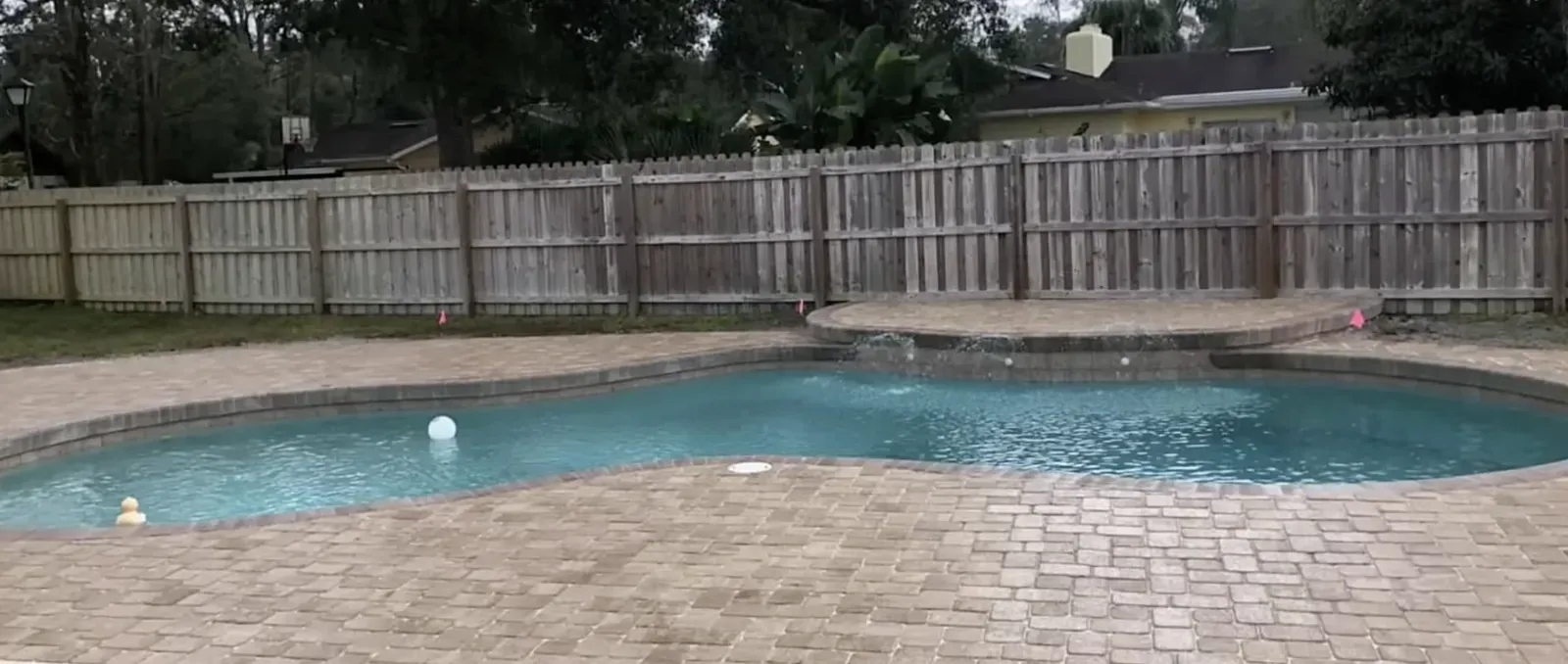
What Pool Deck Pavers Cost in Orlando
Pool deck pavers in the Orlando area typically run 15 to 30 dollars per square foot installed, depending on the material and the shape of your deck. A standard 700 square foot deck lands roughly between 12,000 and 25,000 dollars.
| Material | Installed price per sq ft |
|---|---|
| Concrete pavers | $14 to $22 |
| Travertine | $17 to $28 |
| Porcelain | $20 to $32 |
Two costs are unique to pool decks. Coping, the finished edge that caps the pool shell and overhangs the water, is priced by the linear foot rather than the square foot, usually 40 to 75 dollars per foot, because it takes precise masonry. And a deck with lots of curves and radius cuts around a freeform pool costs more in labor than a simple rectangular deck, since every curve means hand-cutting pavers to fit.
Why the quotes vary
As with any paver job, the base drives the price, but on pool decks the material choice moves the number just as much. A concrete-paver deck and a French-pattern travertine deck of the same size can be thousands of dollars apart. Ask for an itemized estimate that separates base work, the pavers, coping, and labor so you can see where the money is going.
Why Travertine Wins on Florida Pool Decks
This is not a style preference, it is physics. Travertine’s naturally porous structure sheds heat instead of storing it, so the surface stays meaningfully cooler than concrete or dark pavers in direct midday sun. On a July afternoon the difference between a gray concrete deck and an ivory travertine deck is the difference between hopping across and walking across. That is why nearly every higher-end pool deck around Orlando runs travertine.
- Heat: travertine stays noticeably cooler underfoot than concrete pavers in full sun, which is the whole point on a surface you cross barefoot.
- Grip: tumbled or brushed travertine keeps its traction when wet. Honed or polished travertine, by contrast, gets slippery and should not be used around a pool.
- Pool chemistry: sealed travertine handles chlorine splash and salt-system air without degrading.
- Color: lighter tones like ivory and silver stay the coolest and match the coastal look. Darker walnut and noce tones hide leaf stains better under an oak canopy.
The one hard rule with travertine: never put a film-forming, glossy sealer on it. A topical sealer traps moisture, turns milky within a wet season, and adds a slick film exactly where you do not want one.
Travertine takes a penetrating sealer that soaks in, or nothing at all. Concrete pavers remain a solid budget option in lighter colors, and porcelain suits contemporary designs that want zero sealing. Our material comparison guide breaks down all three.
Do You Need a Permit for a Pool Deck in Orlando?
Usually, yes. Orange County requires a permit anytime pavers are placed, and pool decks have an added layer because the work sits right against the pool shell and often touches the drainage plan for the yard. If the deck is part of a new pool build, it falls under that project’s permitting. If you are re-decking an existing pool, the paver work still needs a Zoning permit, the same 76 dollar fee and four business day review as any other paver job in unincorporated Orange County.
Inside Orlando city limits the work goes through the city’s Engineering Permit process instead. And if your home is in an HOA, which most Lake Nona, Windermere, and Dr. Phillips pool homes are, the architectural review committee will likely need to approve the material and color first under Florida Statute Chapter 720. That approval often takes longer than the permit, so start it early.
What a Proper Pool Deck Install Looks Like
Base and slope
Like any paver surface in Florida, a pool deck needs a compacted base over geotextile fabric on our sandy soil. What makes a pool deck different is slope. The deck has to be pitched to carry water away from both the pool shell and the house, usually toward deck drains, so rain and splash-out do not pool against the coping or run back toward the foundation. Low spots that puddle grow algae faster and get slippery, so getting the slope right is a safety issue, not just a drainage one.
Coping and the pool edge
Coping is the specialized edge that caps the pool beam and overhangs the waterline slightly. It protects the shell, gives swimmers a defined grip point, and has to be set with a precise, consistent overhang. Bullnose and eased-edge profiles are the common choices. This is the detail where rushed crews show their level of care, so it is worth looking closely at a company’s past coping work.
Sealing schedule
Timing matters on a new deck. The first seal goes on about four to six weeks after installation, once efflorescence has surfaced and cleared, because sealing too early traps it. After that, an inland Orlando deck is generally resealed every three years, while decks nearer the coast or with heavy salt exposure benefit from a shorter cycle. Always a penetrating sealer, never a glossy topical one.
Pool Deck Resurfacing: Pavers Over Existing Concrete
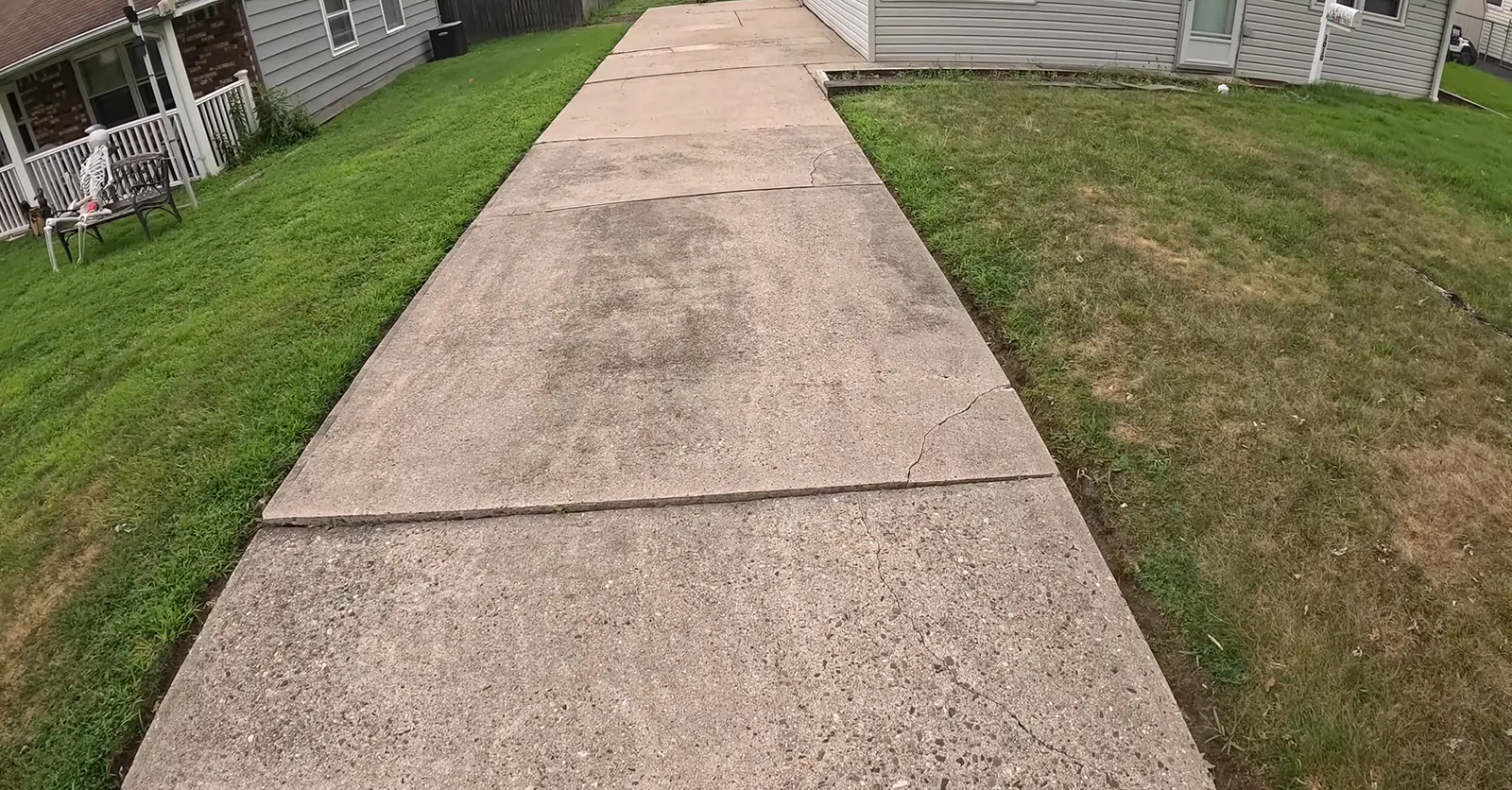
If you have a cracked or dated poured-concrete pool deck, you may not need a full tear-out. When the existing slab is structurally sound, thin pavers can be installed as an overlay, which saves on demolition and hauling. The catch is height: an overlay raises the deck surface, so the coping height, the door thresholds, and the transition to the house all have to be checked first.
If the slab is cracking because the ground under it is moving, an overlay only hides the problem for a while, so an installer should inspect before recommending it. We cover this on our pool deck resurfacing page.
How Long Does a Pool Deck Take?
Most pool decks run five to seven days, longer than a driveway because of the coping work, the slope and drainage detailing, and the hand-cutting around curved pool edges. Permit and HOA timelines, plus wet-season rain, can extend that. Sealing is a separate visit a few weeks after the deck is finished.
Pool Deck Pavers Across Metro Orlando
Pool deck work clusters where the pools are. In Windermere and the gated communities around the Butler Chain of Lakes, and on the estates of Dr. Phillips and Bay Hill, travertine decks with detailed coping are the norm, and architectural review is part of the job.
In Lake Nona, newer pool homes come with strict HOA color palettes to match. And across Kissimmee, Davenport, and Champions Gate, the vacation-rental market means pool decks that have to photograph well for listings and turn around fast between bookings. We cover pool deck installation across Orange, Seminole, and Osceola counties.
How We Match You With a Pool Deck Installer
Pavers Orlando Co is not the contractor. We connect you with a licensed, insured local installer whose license we verify against Orange County’s public database first. Pool decks reward experience, especially on coping and slope, so we point you to installers with real pool deck work behind them. You get itemized estimates to compare and deal with the installer directly from there.
Common Questions About Pool Deck Pavers in Orlando
Get a Free Pool Deck Estimate in Orlando
Tell us your deck size, whether it is a new deck or a resurface, and the material you are leaning toward. We will match you with a vetted local installer who covers your area and can come out to measure, at no cost and no obligation. Call (689) 686-8021 or request a quote online.