Paver Driveway Installation in Orlando, FL
A paver driveway is the one hardscape project where the part you never see decides whether it lasts. In Central Florida’s sandy soil, the base under the pavers matters more than the pavers on top, and it is the first thing a low bid cuts.
Pavers Orlando Co is a referral service, not a contractor. We match you with a licensed, insured local installer, then set up a free on-site estimate and stay out of the way.
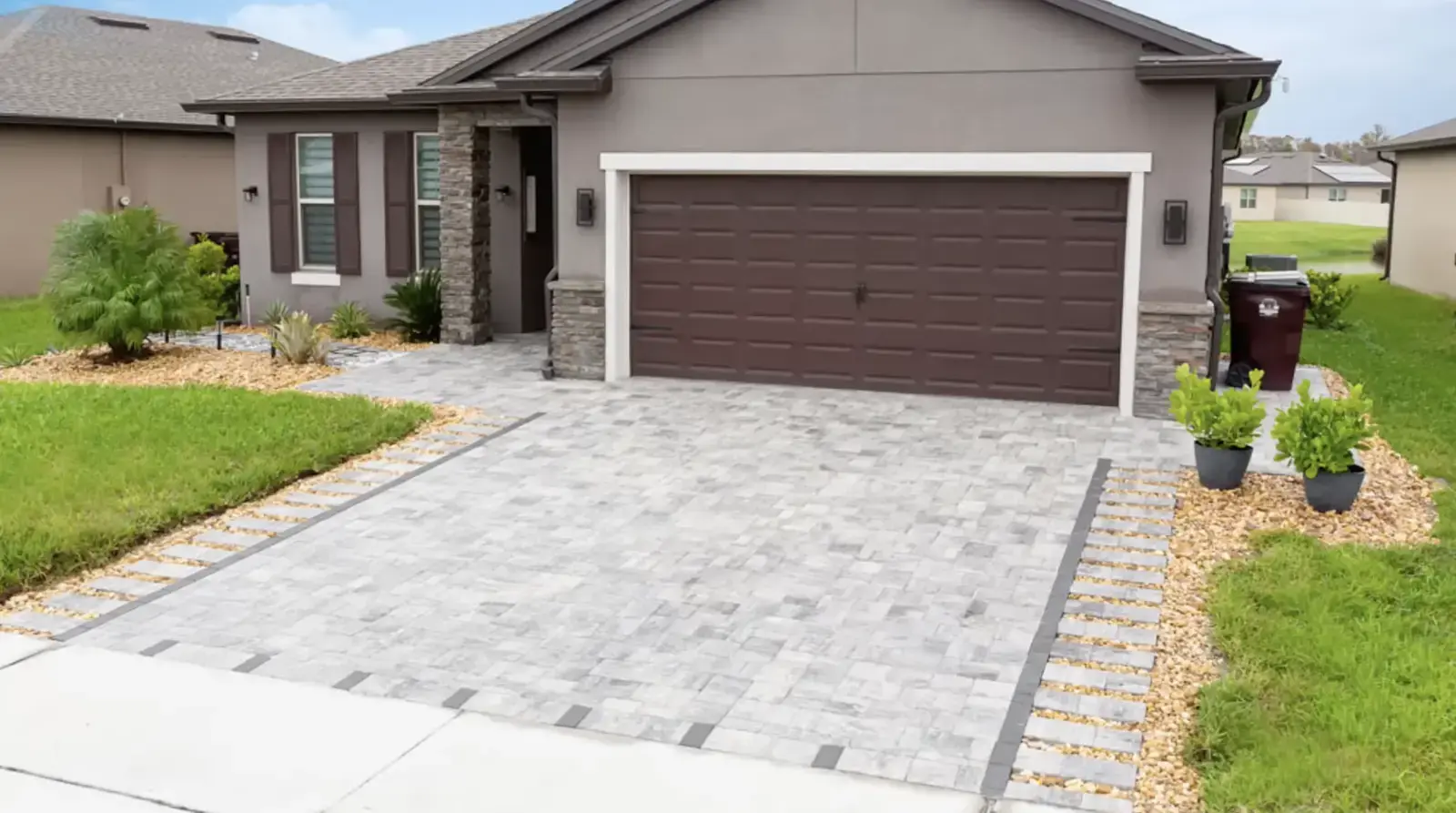
- Six to eight inch compacted limerock base built in controlled lifts, not dumped and rolled once
- Geotextile fabric separating the base from Florida’s sandy subgrade
- Concrete edge restraint, not plastic spikes, with a concrete-set border course
- Drainage rerouting for downspouts and roadside swales built into the plan
- Licensed, insured installer verified against Orange County’s public contractor database
What a Paver Driveway Costs in Orlando
For a standard concrete-paver driveway in the Orlando area, plan on roughly 13 to 18 dollars per square foot installed. Most full driveways land between 8,000 and 22,000 dollars. The spread comes down to three things: the size of the driveway, the paver you choose, and how much base work the job needs.
| Material | Installed price per sq ft |
|---|---|
| Concrete pavers | $12 to $18 |
| Brick / clay pavers | $14 to $22 |
| Travertine | $14 to $28 |
| Porcelain / natural stone | $22 to $32 |
A 500 to 600 square foot driveway usually runs 15,000 to 34,000 dollars for mid-grade work in Orange County. A smaller two-car driveway can start closer to 8,000. Removing an old concrete slab adds a few dollars per square foot for demolition and hauling.
Why two quotes for the same driveway can differ by 40 percent
Almost always, the gap is underground. Base preparation is the biggest cost variable, and it is invisible once the driveway is finished. A crew pricing a shallow three-inch base and a crew pricing a proper six to eight inch compacted base are not quoting the same job, even though both estimates say paver driveway.
Ask every bidder to break out excavation, base depth and material, bedding sand, pavers, edge restraint, and labor as separate lines. A single number with no breakdown is where change orders come from later. For the full breakdown, see our Paver Cost in Orlando guide and How to Read a Paver Estimate.
Do You Need a Permit for a Paver Driveway in Orlando?
Permit Required, No Exemption
Yes. Orange County is clear about this: anytime you pour concrete or place pavers, a permit is required, and there is no size exemption. A driveway needs a Zoning permit, reviewed against placement, location, and materials, with a final inspection at the end.
Fees & How to Apply
Total fee is 76 dollars, a 38 dollar permit fee plus a 38 dollar development engineering review fee. Pull the permit after code enforcement contacts you and it costs 40 dollars more. Apply by email to Zoning at ocfl dot net with the subject line Residential Pavers Application, then pay through the Fast Track portal under the Zoning slash BZA category.
Review Timeline & City vs County
Review finishes within four business days of payment. If your home sits inside Orlando city limits rather than unincorporated Orange County, the city handles the same work as an Engineering Permit. Applying under the wrong permit type is a common cause of delay, so confirm which authority covers your address before you file.
Driveway Apron Permit
One thing that catches homeowners off guard on driveways specifically: the driveway apron, the strip between your property line and the street, usually needs its own right-of-way permit. A good installer files all of this for you. Our full Orlando Permit Guide covers both.
What a Proper Paver Driveway Install Looks Like
A driveway carries the weight of vehicles every day, so it needs far more underneath it than a patio or walkway does. Here is what separates a driveway that holds its lines for decades from one that ruts and sinks in a few wet seasons.
The base is the whole job
A paver driveway in Central Florida needs a six to eight inch compacted limerock base, built up in controlled lifts rather than dumped and rolled once. Compacting in thin layers is what stops the base from settling unevenly later.
Under the base goes a geotextile fabric that separates the limerock from the sandy subgrade so the two never mix and lose their load-bearing strength. Skip the fabric in Florida sand and the base slowly contaminates from below.
Edge restraint keeps the field together
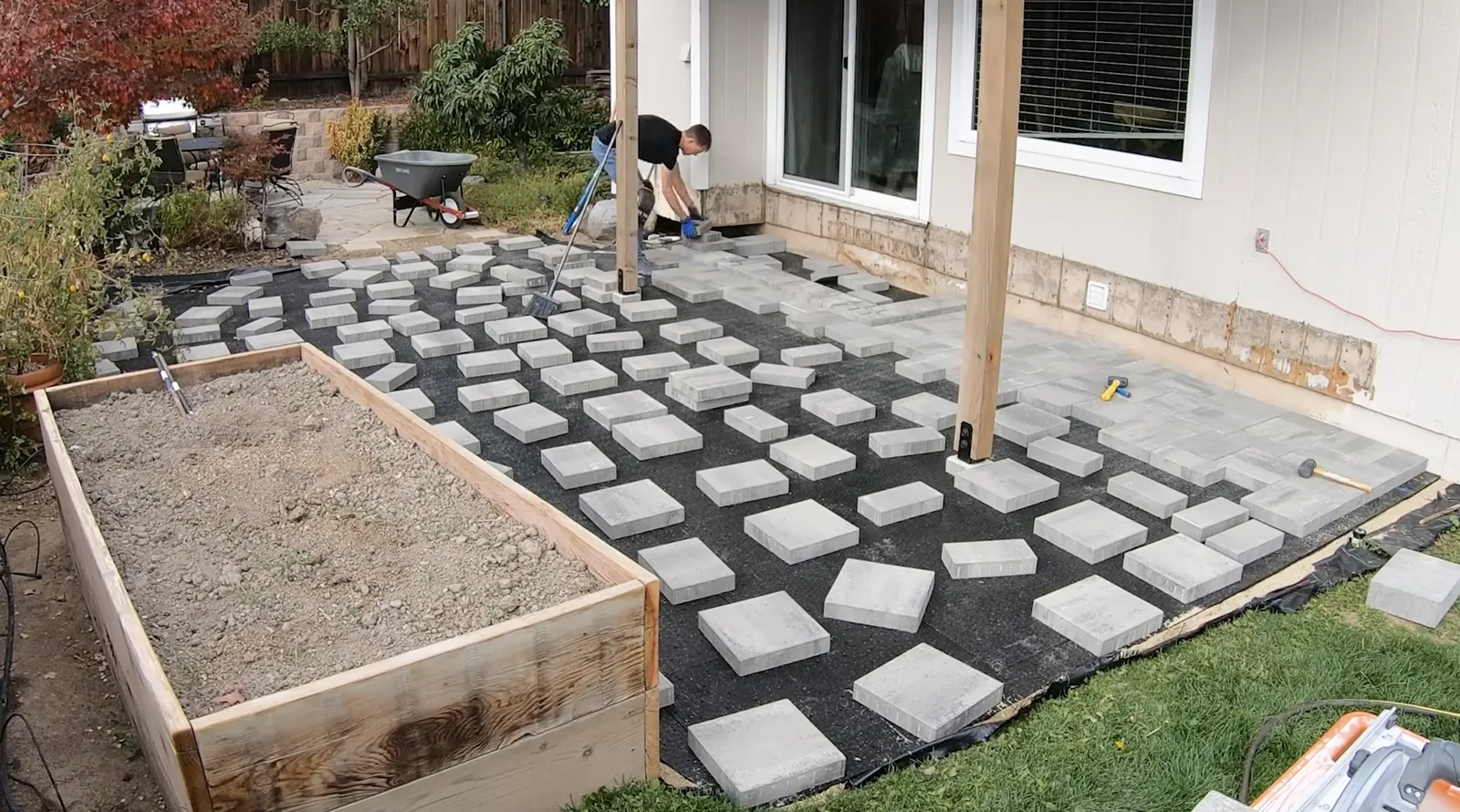
Use concrete edging, not plastic spike edging. Florida’s loose, sandy soil does not hold spikes reliably, and once an edge lets go, the whole field of pavers begins to spread and open up at the joints.
On driveways, the border course is usually set in concrete for the same reason.
Drainage has to be part of the plan
Downspouts that empty straight onto the pavers wash the joint sand out over time, so a competent installer reroutes them.
Roadside swales cannot simply be filled to raise the driveway profile. The correct fix is a culvert with the driveway built over it, which also keeps you compliant with county drainage rules.
Our Driveway Installation Process, Step by Step
Every installer we work with follows the same sequence. Knowing it helps you spot where a cheap crew is cutting corners.
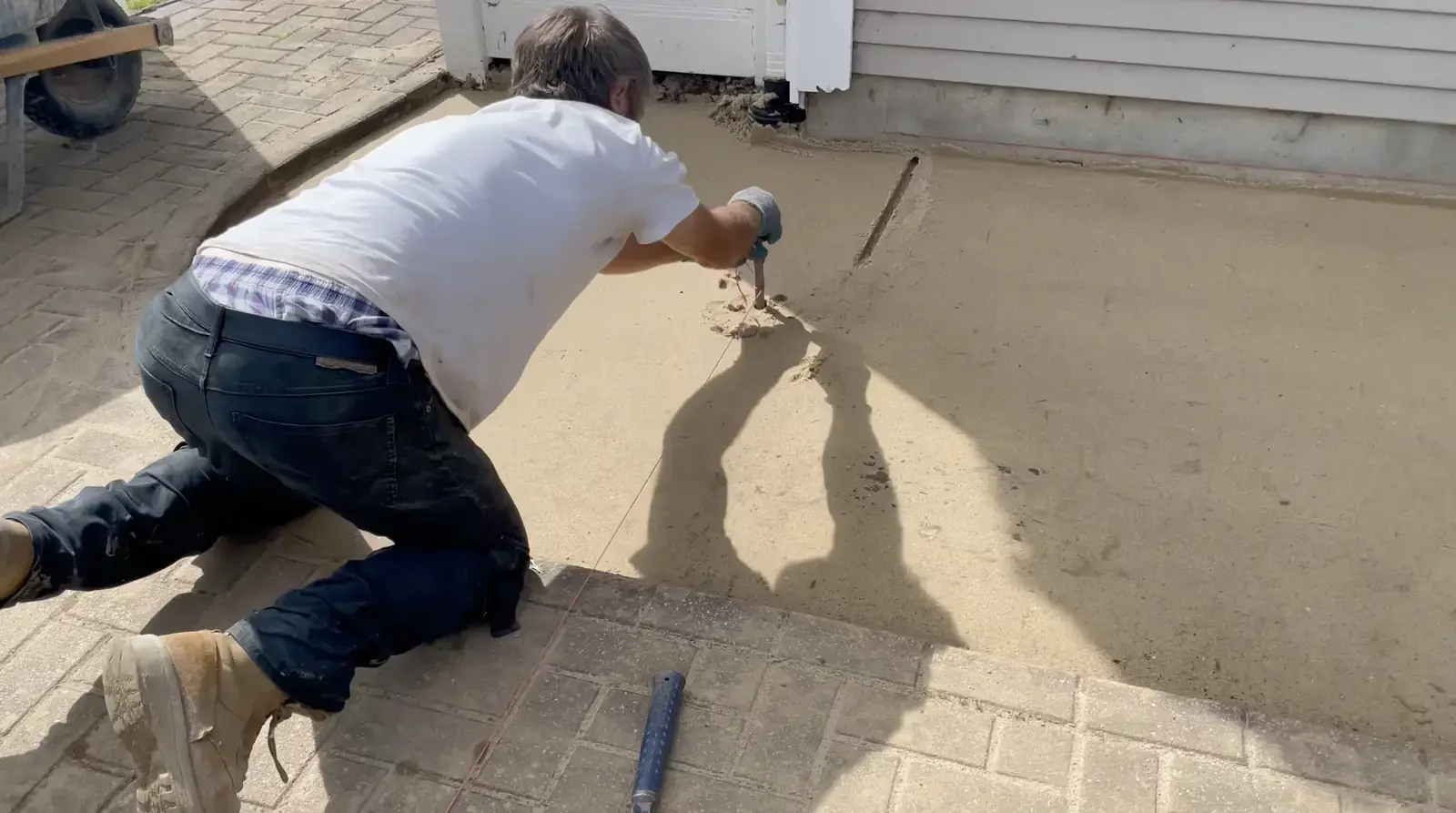
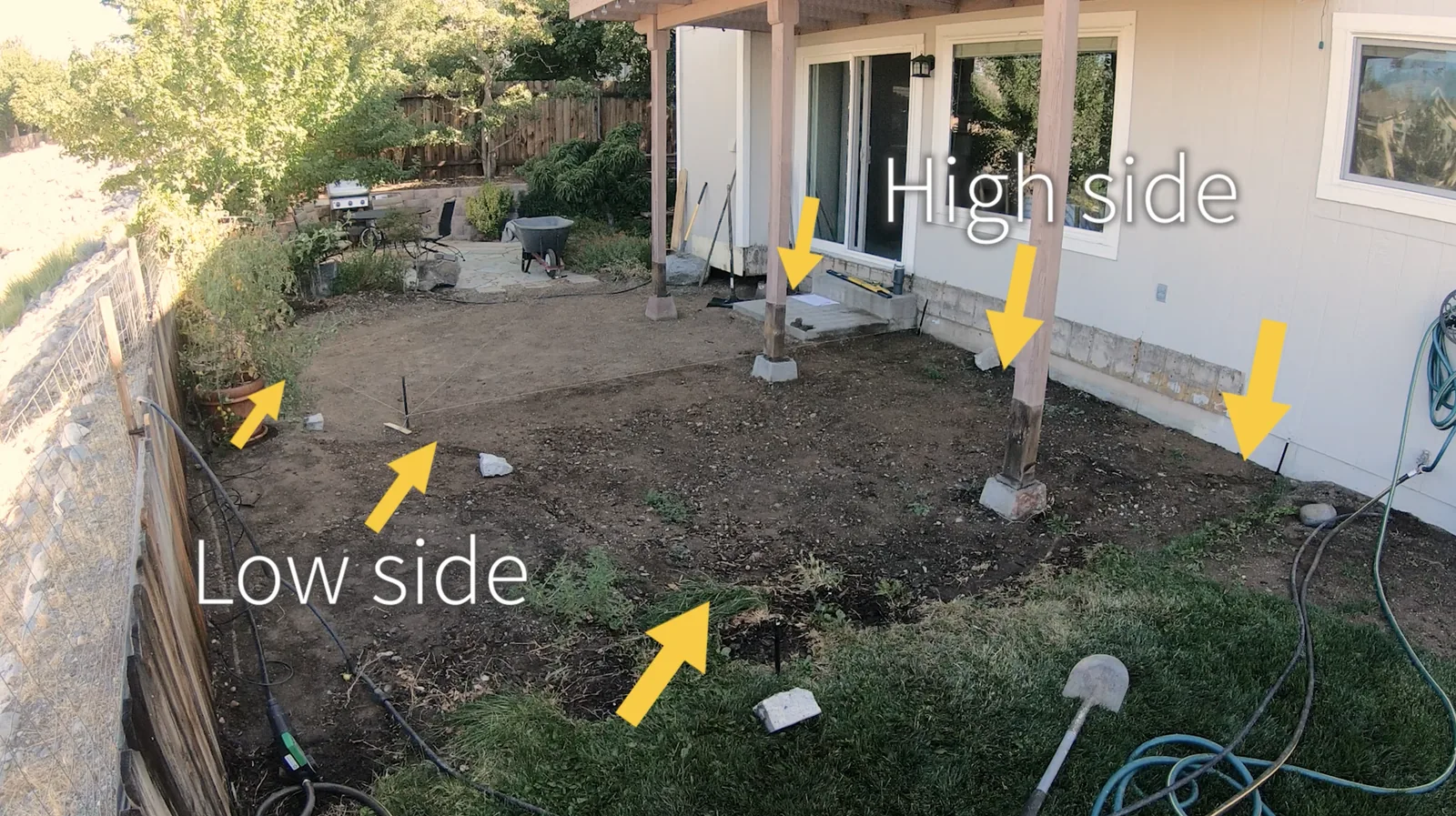
- Layout and utility check. String lines square the driveway and set the finished height; the crew confirms no utility lines run through the dig area.
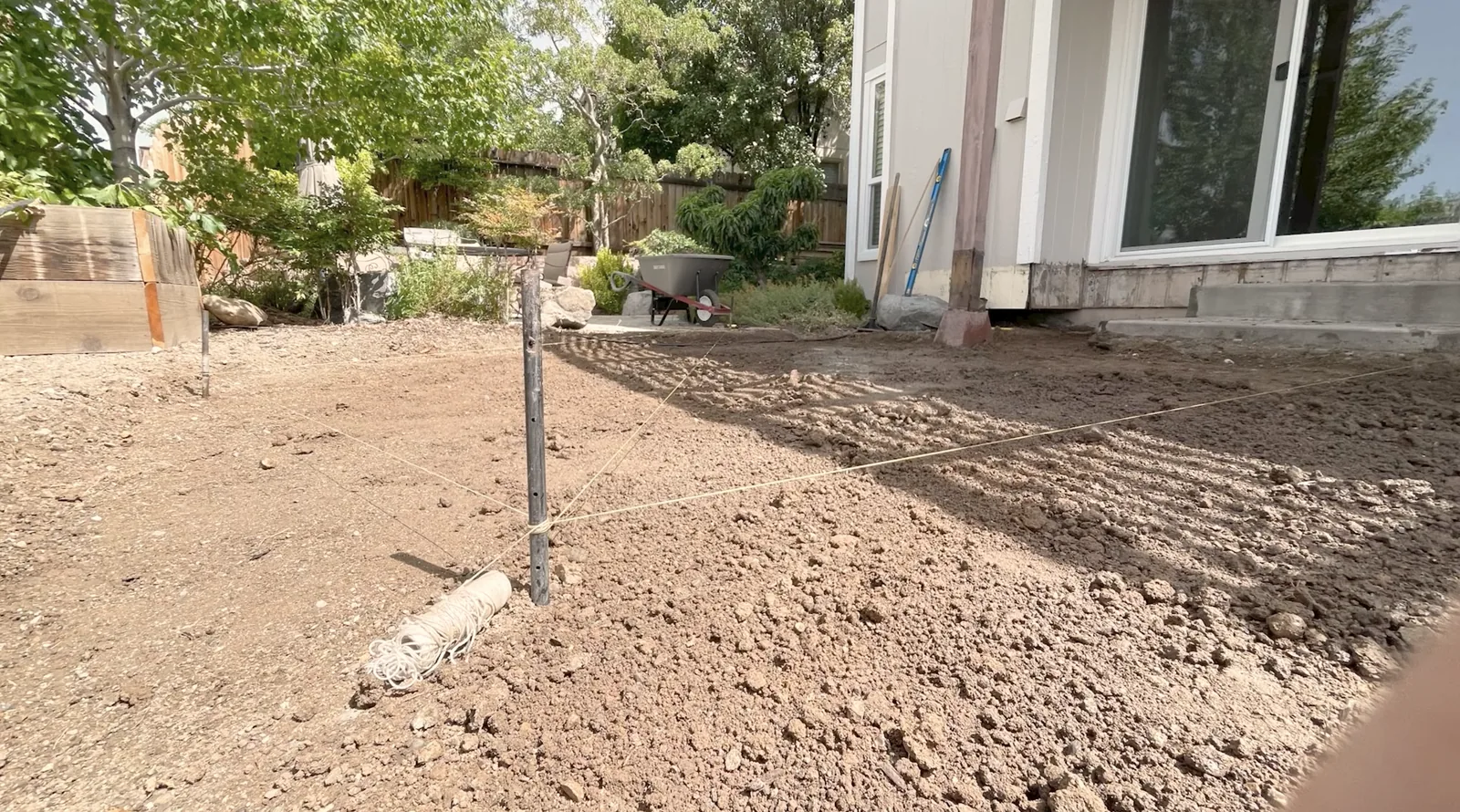
- Excavation. Dug deep enough for the full base, bedding sand, and paver thickness, removing any soft or organic soil.
- Geotextile and base. Fabric first, then limerock base compacted in lifts to six to eight inches for vehicle loads.
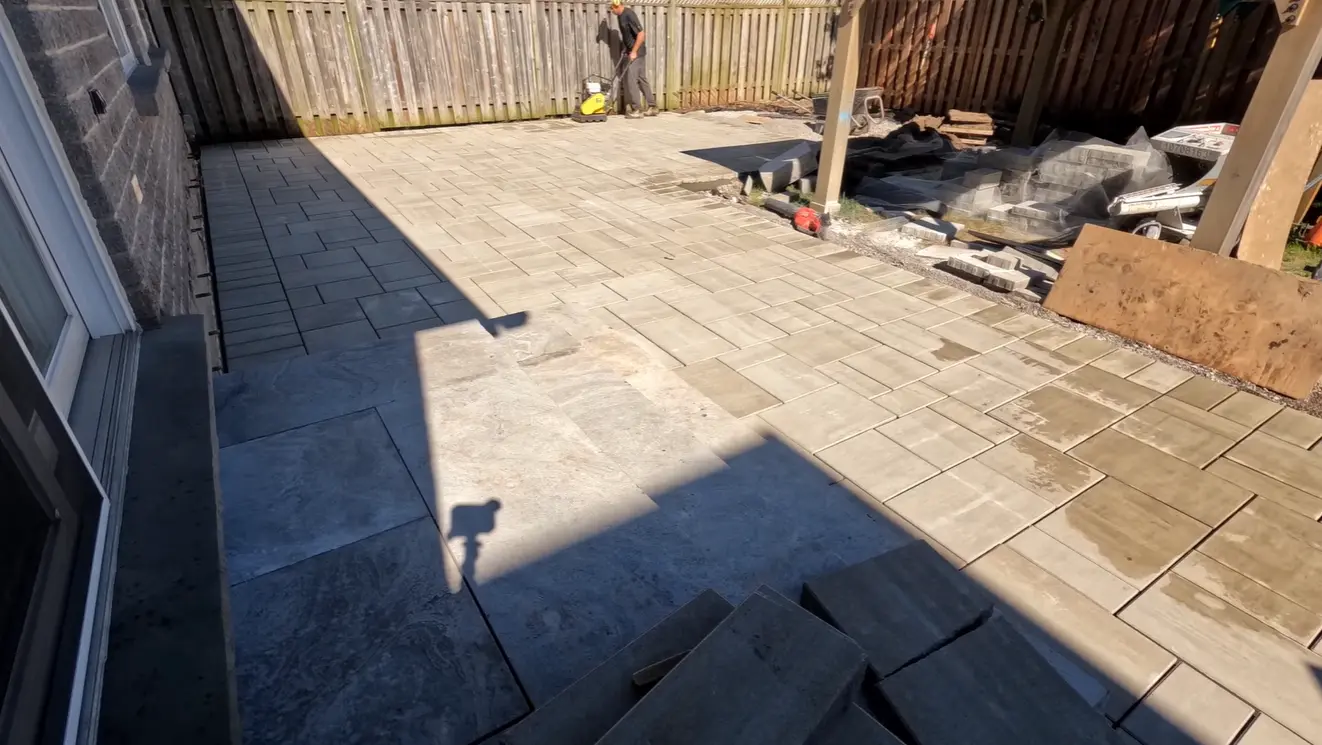
- Bedding sand, laying, compaction, joint sand, and a final cleanup follow, with sealing done as a separate visit weeks later once the pavers have cured.
Choosing a Paver for Your Orlando Driveway
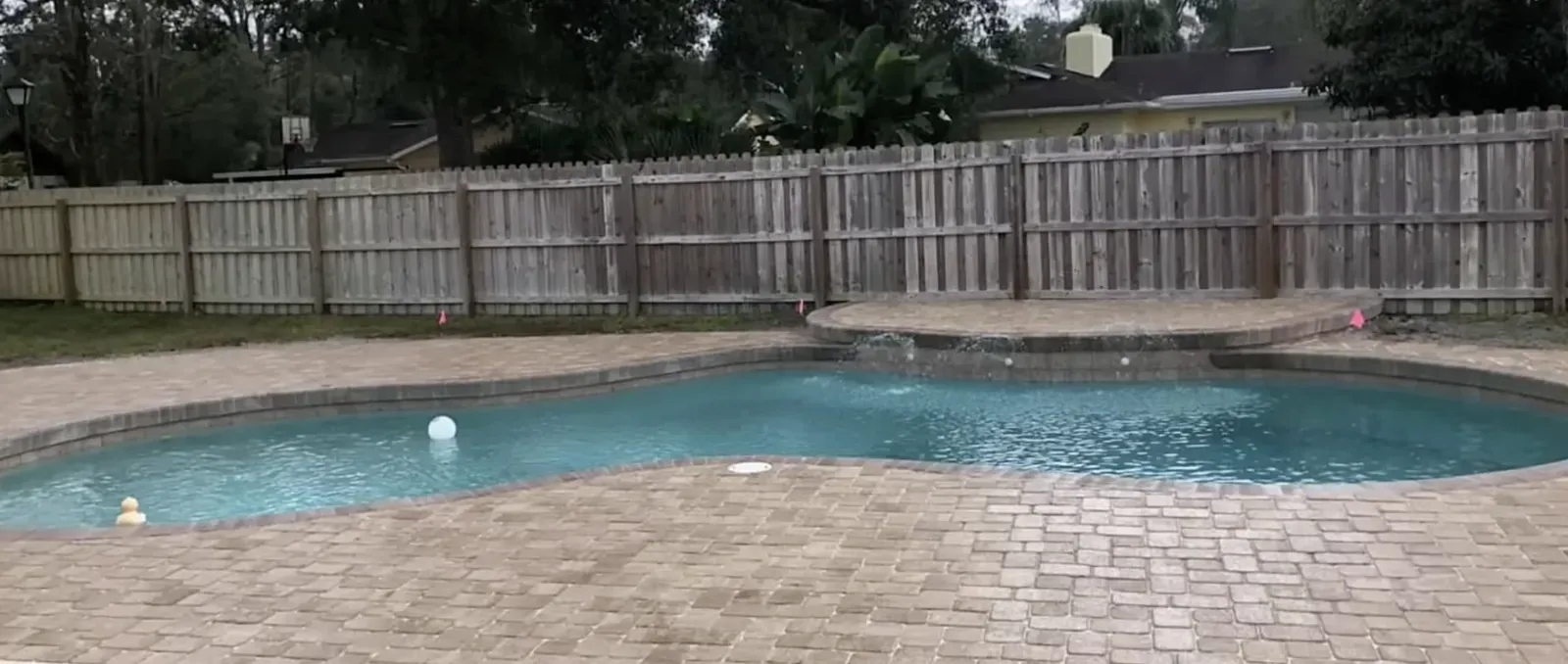
Driveways take real weight and full Florida sun, so material choice matters more than on a shaded patio. Concrete pavers are the default: lowest cost, the widest range of shapes and colors, rated for vehicle loads, and any single paver can be lifted and replaced if it is ever damaged.
Brick and clay pavers hold their color because it runs through the material instead of sitting on the surface as a pigment, so they do not fade the way some concrete pavers can. They suit Winter Park and other traditional-home neighborhoods. Travertine and porcelain show up on higher-end estate driveways in Windermere and Dr. Phillips where the look matters and budget is not the limit.
Darker pavers get hot and can fade faster under Orlando sun. If a driveway doubles as a play or basketball area, lighter colors are worth considering.
How Long Does a Paver Driveway Take?
Most driveways run three to five days. What adds time: extra excavation when soft soil has to come out, permit and inspection scheduling, an HOA architectural review that runs on the association’s calendar, and rain during the June to September wet season. Sealing is a separate short visit weeks later, not part of the initial timeline.
Why Paver Driveways Fail in Central Florida
When a driveway fails here, the pavers are rarely the problem. The ground moved. Sandy soil shifts, the high water table carries fine particles away and leaves voids, and organic pockets left in place compress under vehicle weight. Every one of those failures traces back to base and drainage decisions made before the first paver went down.
A driveway built on a starved three-inch base will rut where the tires sit long before one built on a proper eight-inch base shows any movement. Our guide on why pavers sink in Central Florida goes deeper.
Paver Driveways Across Metro Orlando
Driveway work looks different depending on where you are. In Winter Park, most jobs involve detailing around the roots of sixty-year-old oaks that a newer neighborhood never has to deal with. In College Park and other tight infill streets, access is the challenge, since crews often have to wheelbarrow base material down narrow side yards. In Windermere and Dr. Phillips, driveways run to half-acre estates with gated-community architectural review to clear first.
In Lake Nona and other master-planned areas, the job usually comes down to matching a strict HOA-approved material and color list. See your neighborhood page for the local permit authority and HOA details.
How We Match You With a Driveway Installer
Pavers Orlando Co is not the contractor. We connect you with a licensed, insured local installer whose license we confirm against Orange County’s public contractor database before we send anyone your way. Because we do not run a crew or sell materials, we have no reason to push you toward a bigger driveway than you need. You get itemized estimates you can actually compare, and you deal directly with the installer from there.
Common Questions About Paver Driveways in Orlando
Get a Free Paver Driveway Estimate in Orlando
Tell us your driveway size, the paver you have in mind, and your neighborhood. We will match you with a vetted local installer who covers your area and can come out to measure, at no cost and no obligation.